

What Is Thermal Shock in Glass? Understanding Sudden Temperature Changes...
Read MoreWhy Does Candle Wax Turn Yellow or Change Colour Over Time?
Why Does Candle Wax Turn Yellow or Change Colour Over Time? It is a question that becomes easier to answer once we distinguish everyday language from the underlying chemistry and physics. The way aromatic materials and candle wax behave is shaped by composition, temperature, time and the surrounding environment. A simple label or first impression rarely tells the full story.
This Studio Kinza guide explains the science behind why candle wax changes colour for curious readers and makers. Rather than presenting a shopping list or a universal recipe, it focuses on mechanisms, observations and practical ways to think critically about what you see or smell. The examples are educational; specific formulas and finished candles still require appropriate supplier guidance and safety testing.
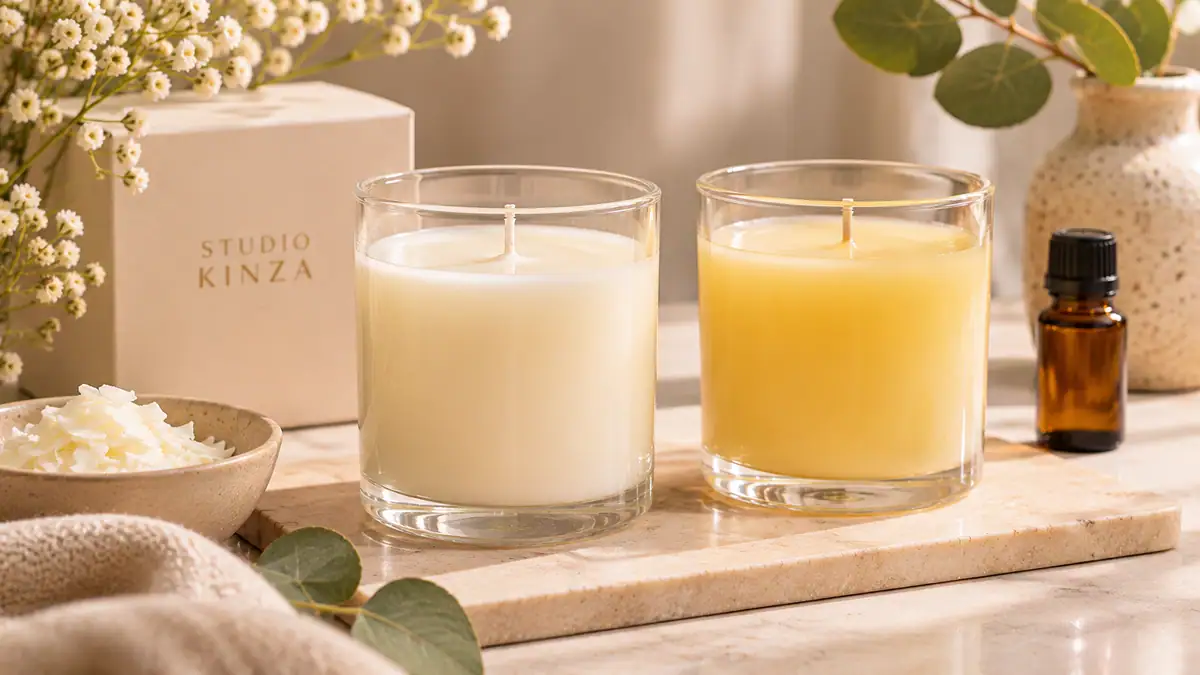
Why candle colour can change
A candle that begins white or cream may become yellow, beige or unevenly tinted over time. Changes can involve wax, fragrance, dye or other ingredients. Exposure to light, oxygen and heat may alter certain compounds, while some colour shifts reflect the original material rather than damage. The pattern and timing provide clues, but they rarely prove a cause on their own.
For a beginner, the key is to separate a visible observation from a proposed mechanism. Ask what changed, which variables were controlled, and whether another explanation fits the evidence. Scientific explanations are strongest when they can be checked rather than repeated as workshop folklore.
Oxidation in everyday terms
Oxidation is a family of chemical reactions in which molecules change through electron transfer, often involving oxygen. Some wax constituents and fragrance ingredients are more susceptible than others. Reaction products can absorb light differently, producing a yellow or darker appearance. Oxidation rates depend on the formulation and its exposure history.
Consider the distinction between an ingredient and a finished system. The same material may behave differently when its concentration, surrounding ingredients or temperature changes. This is why isolated facts about a raw material cannot predict every outcome in a completed candle or fragrance.
The role of sunlight and ultraviolet light
Sunlight contains ultraviolet and visible wavelengths that can drive or accelerate photochemical changes in some materials. Candles displayed near windows may discolour unevenly, especially where packaging or a label shields part of the surface. Light can also fade certain dyes rather than only darken them. The exact result depends on the ingredients.
An accurate explanation should also distinguish what is generally established from what depends on the specific formulation. A supplier may provide practical limits for one material, but those limits cannot be transferred automatically to another product. Documenting the actual materials makes comparisons more meaningful.
Heat and storage conditions
Elevated temperatures can accelerate many chemical processes and change the physical structure of wax. Repeated warming and cooling may create visible patterns or promote migration of ingredients. A candle stored in a hot vehicle can therefore change differently from one kept in a cool, stable room. Avoid treating heat-related changes as proof of one specific reaction.
Think about time as another experimental variable. Some effects are immediate, while others develop gradually under storage or repeated temperature changes. A single photograph taken on the day of manufacture cannot establish long-term stability. Repeated observations provide a more complete picture.
Fragrance ingredients and yellowing
Some aromatic materials naturally have a yellow or amber tint, while others can change colour as they age. Vanilla-like materials and certain fragrance compositions are commonly associated with discolouration in some wax systems, but effects vary. A fragrance that appears colourless in its bottle may still behave differently after mixing into wax.
A useful way to teach this topic is to compare two carefully controlled samples rather than changing several ingredients at once. Even a small trial can show whether a proposed cause is plausible. It cannot establish a universal rule, but it can prevent conclusions based on coincidence.
Wax and additive differences
Different waxes start with different shades and contain different mixtures of components. Refining, hydrogenation, blending and additives can influence initial appearance and stability. Even batches of the same general wax type may differ slightly. Understanding why soy wax develops frosting also helps makers separate polymorphic white surface crystals from chemical discolouration. Compare candles against a control made from the same wax batch before drawing conclusions about the fragrance.
Why dyes may fade or shift
Colourants absorb particular wavelengths of light, creating the colour we see. Some dyes are sensitive to light, heat or interactions with other ingredients. A blue or pink candle might fade while an undyed candle yellows. Pigment and dye behaviour depends on the actual colourant chemistry and how it is dispersed.
How to investigate discolouration
Keep a labelled reference sample protected from light and compare it with samples exposed to different conditions. Change one variable at a time: fragrance, dye, packaging or storage location. Record dates and photograph samples under the same lighting. These controls help separate ingredient-related effects from environmental exposure.
Can discoloured candles still be used?
Colour change alone does not establish that a candle is unsafe or safe. Look for additional issues such as unusual surface liquid—outlined in our guide on why candles sweat fragrance oil—as well as cracking, changes in smell or evidence of overheating. Follow manufacturer instructions and evaluate the complete candle system before use. Avoid making safety claims based solely on whether the wax looks white.
Practical storage principles
Keep candles in stable indoor conditions, away from direct sun and excessive heat. Reviewing expert candle care tips to make candles last longer provides practical steps for protecting both colour stability and fragrance integrity between burns. Protective packaging may reduce light exposure, but it cannot prevent every chemical change. Maintain batch records and avoid promising permanent colour stability without testing. For makers, consistent storage is part of quality control, not a substitute for sound formulation.
For those looking to explore wax chemistry, fragrance blending, and temperature control firsthand, joining a guided candle making workshop in Dubai offers practical experience in crafting stable, balanced candles.
Five Key Takeaways
- Oxidation and UV light drive yellowing: Exposure to oxygen and ultraviolet wavelengths triggers chemical reactions that shift light absorption toward yellow or amber hues.
- Vanillin and fragrance oils tint wax: Certain aromatic ingredients, particularly vanilla-rich blends, naturally oxidize and darken wax over time.
- Elevated heat accelerates shifts: Storing candles near sunny windows or in warm vehicles speeds up molecular degradation and colour migration.
- Synthetic dyes can fade unevenly: Added colourants may bleach or shift hue under indoor lighting, while undyed natural waxes tend to warm toward cream or yellow.
- Cosmetic colour changes are rarely unsafe: Mild discolouration alone does not impair burn safety unless accompanied by oil seepage, cracking, or structural defects.
Frequently Asked Questions
Why does white candle wax turn yellow?
White candle wax commonly turns yellow due to oxidation, exposure to ultraviolet light, or chemical interactions with fragrance ingredients—especially compounds containing vanillin. Over time, these reactions alter how the wax and fragrance molecules absorb light, shifting the shade from bright white to cream or yellow.
Can sunlight change candle colour?
Yes. Sunlight contains ultraviolet (UV) and high-energy visible wavelengths that trigger photochemical reactions in both wax and fragrance oils. Displaying candles near windows often causes uneven yellowing on the sun-facing side or fades added candle dyes.
Does fragrance affect wax colour?
Yes. Some fragrance oils have a natural amber tint, while others contain compounds like vanillin or certain citrus and spice notes that darken as they oxidize inside the wax matrix, even if the oil looked clear in the bottle.
Can candle dye fade?
Yes. Candle dyes and pigments vary in lightfastness and thermal stability. Exposure to UV rays, fluorescent shop lighting, or elevated storage temperatures can break down colourant molecules, causing vibrant shades like blue, pink, or purple to fade or shift tone.
Does yellowing prove a candle is unsafe?
No. Mild yellowing or colour fading is typically a cosmetic change caused by light or fragrance oxidation and does not mean the candle is unsafe to burn. However, always inspect the candle for accompanying signs of heat damage, such as pooled surface fragrance oil, warped vessels, or cracked wax, before lighting.
How should candles be stored?
Store candles in a cool, dry indoor space away from direct sunlight, radiators, and extreme temperature fluctuations. Keeping lids on jars or using UV-protective opaque packaging also helps preserve both the original colour and fragrance integrity.
About Studio Kinza
Studio Kinza is a Dubai-based artisanal candle studio located in Warsan, International City, crafting clean-burning handcrafted soy candles from non-toxic botanical waxes and fine fragrance oils. Through hands-on workshops, masterclasses, and educational guides, we explore the chemistry and craftsmanship behind safe, mindful candle making.
Plan Your Experience
Ready to explore the art and science of pouring natural soy candles in a guided studio setting? Contact the Studio Kinza team to reserve workshop seats, arrange private group sessions, or enquire about custom candle experiences in Dubai.

Heat Transfer Through Glass Candle Containers
How Does Heat Travel Through a Glass Candle Container? Look...
Read More

How To Photograph Candlelight
How to Photograph Candlelight Without an Orange Colour Cast A...
Read More