

What Is Thermal Shock in Glass? Understanding Sudden Temperature Changes...
Read MoreWhy Does Fragrance Oil Seep Out of a Candle? Understanding Candle Sweating
Why Does Fragrance Oil Seep Out of a Candle? Understanding Candle Sweating It is a question that becomes easier to answer once we distinguish everyday language from the underlying chemistry and physics. The way aromatic materials and candle wax behave is shaped by composition, temperature, time and the surrounding environment. A simple label or first impression rarely tells the full story.
This Studio Kinza guide explains the science behind why candles sweat fragrance oil for curious readers and makers. Rather than presenting a shopping list or a universal recipe, it focuses on mechanisms, observations and practical ways to think critically about what you see or smell. The examples are educational; specific formulas and finished candles still require appropriate supplier guidance and safety testing.
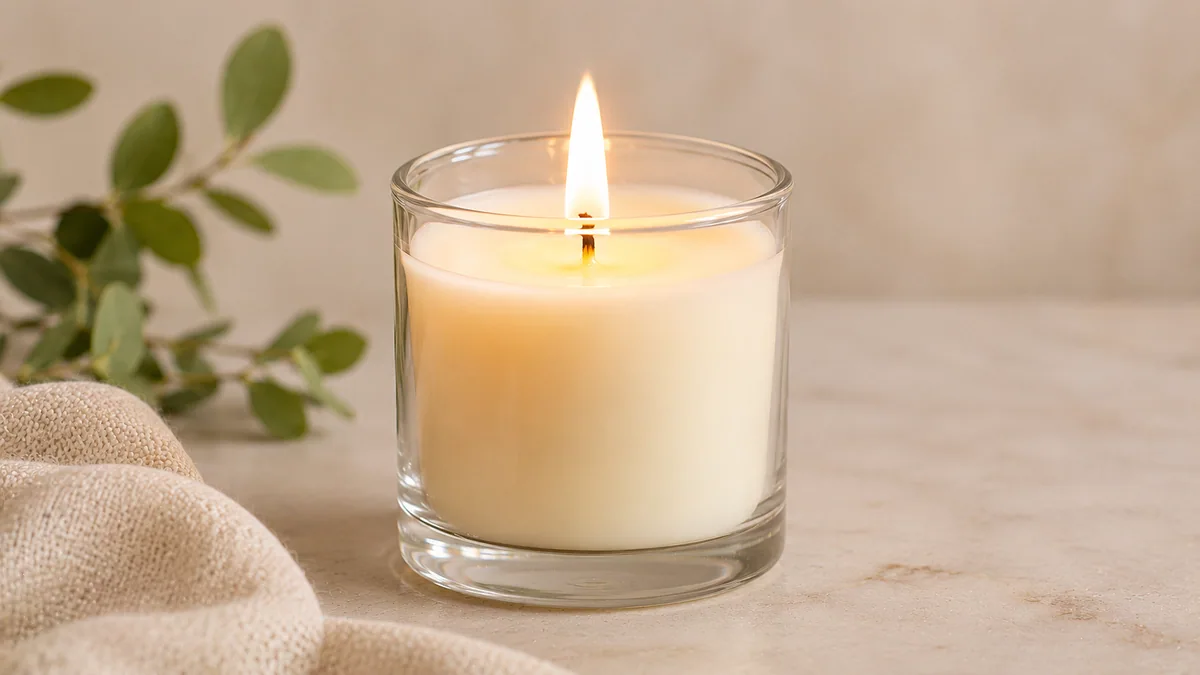
What candle sweating looks like
Candle sweating describes droplets or an oily sheen appearing on the surface of a finished candle. The material may be fragrance-rich liquid, but appearance alone cannot prove its exact composition. Some droplets emerge after a temperature change, while others appear soon after pouring. Distinguishing surface oil from condensation or contamination is the first step in investigating the problem.
For a beginner, the key is to separate a visible observation from a proposed mechanism. Ask what changed, which variables were controlled, and whether another explanation fits the evidence. Scientific explanations are strongest when they can be checked rather than repeated as workshop folklore.
Why wax and fragrance may separate
A candle is a mixture, not a single substance. Fragrance molecules must remain compatible with the wax matrix as the material cools and changes structure. If the formulation cannot retain the liquid fragrance uniformly, some may migrate or collect at the surface. Compatibility depends on the particular wax and fragrance formula, not only on a headline percentage.
Consider the distinction between an ingredient and a finished system. The same material may behave differently when its concentration, surrounding ingredients or temperature changes. This is why isolated facts about a raw material cannot predict every outcome in a completed candle or fragrance.
Fragrance load and capacity
Adding more fragrance does not necessarily make a candle better. Wax systems have practical loading limits, and the usable amount can differ from one fragrance to another. Understanding what fragrance load means in candle making helps makers calculate the maximum percentage of oil a specific wax structure can safely bind. Excess liquid can contribute to visible seepage, but sweating can also occur within a supplier-recommended range when other variables are unfavourable. Always use formulation-specific guidance and test the actual combination.
Temperature swings and migration
Warm conditions can soften wax and increase movement of fragrance components. Repeated heating and cooling can encourage liquid to move towards the surface or alter crystal structure. A candle left in sunlight or transported through hot conditions may behave differently from one stored at a stable indoor temperature. Temperature history is therefore important evidence.
Think about time as another experimental variable. Some effects are immediate, while others develop gradually under storage or repeated temperature changes. A single photograph taken on the day of manufacture cannot establish long-term stability. Repeated observations provide a more complete picture.
Cooling and crystal structure
As wax solidifies, crystals form and the remaining liquid components redistribute. Rapid or uneven cooling may produce a different microstructure from slow, controlled cooling. Examining the differences in candle curing vs cooling clarifies how polymorphic crystal shifts continue to reorganize and redistribute fragrance oils after the surface appears solid. These processes help explain why sweating may emerge after the candle looks finished, though they do not identify a single cause in every case.
Other things that resemble sweating
Water condensation can form when a cool vessel meets humid air. Residue from handling, decorative additives or packaging can also look oily. Compare the location, feel and timing of droplets without touching unknown material unnecessarily. A photograph and careful notes are safer and more informative than guessing from appearance alone.
How to investigate systematically
Record wax type, supplier, fragrance identity, load, pour temperature, cooling conditions and storage history. Compare an unscented control with a scented sample. Change one variable at a time in subsequent batches. If only one fragrance causes trouble, compatibility may be more relevant than general pouring technique.
What to do with a sweating candle
Do not assume visible surface oil is harmless. Keep the candle away from heat and ignition sources while assessing it. Avoid lighting a candle with unexplained pools of liquid on its surface, and follow the wax and fragrance suppliers’ safety instructions. If the problem persists, reformulate and test rather than covering the symptom.
Prevention without oversimplifying
Use a fragrance load supported by the wax supplier, weigh ingredients accurately, mix according to the formulation instructions and allow candles to cool under consistent conditions. Store finished candles away from direct sunlight and temperature extremes. These steps improve process control but cannot guarantee that every fragrance and wax pairing will be compatible.
When a separate troubleshooting article is useful
Sweating is one possible candle defect among tunnelling, frosting, rough tops and poor adhesion. Reviewing common candle mistakes and how to avoid them provides a broader framework for diagnosing structural flaws alongside surface seepage. A dedicated article is valuable when it explains phase compatibility, migration and temperature history in detail.
For makers who want to practice accurate weighing, mixing temperatures, and controlled cooling in person, attending a guided candle making workshop in Dubai offers hands-on experience in formulating balanced, stable candles.
Five Key Takeaways
- Surface oil signals phase separation: Candle sweating occurs when liquid fragrance oil migrates out of the solidifying wax matrix onto the top surface.
- Exceeding fragrance capacity drives seepage: Adding more oil than a specific wax blend can bind leads to liquid pooling and poor combustion.
- Temperature fluctuations accelerate migration: Exposure to direct sunlight or warm storage softens wax crystals and pushes oil to the surface.
- Not all droplets are fragrance oil: High humidity can cause harmless water condensation on cool glass vessels that resembles oily seepage.
- Never burn a heavily sweating candle: Unbound liquid fragrance oil on a candle surface is flammable and poses a safety hazard if ignited.
Frequently Asked Questions
What does candle sweating look like?
Candle sweating appears as small beads of liquid, tiny droplets, or a uniform oily sheen resting on top of the solidified wax. It most commonly forms around the wick or near the edges of the container after cooling or warm storage.
Is every surface droplet fragrance oil?
No. When a cool candle is exposed to warm, humid air, moisture can condense on the wax or glass surface and look like sweating. Residue from handling, botanical toppings, or packaging liners can also leave an oily film.
Can too much fragrance cause sweating?
Yes. Every wax formulation has a maximum fragrance load capacity. Exceeding that limit—or mixing fragrance oil at an incorrect temperature where it fails to bind properly—often causes excess liquid to separate and seep out.
Does warm storage make sweating worse?
Yes. Warm environments, direct sunlight, or rapid temperature swings soften the crystalline structure of botanical waxes, encouraging trapped fragrance oils to migrate upward and pool on the surface.
Should I light a sweating candle?
No. Fragrance oils have specific flashpoints and can flare up if ignited directly as pooled liquid on the surface. Wipe away minor condensation only if you have confirmed it is harmless water, and never light a candle with unexplained pools of fragrance oil.
How can I test the cause?
Pour a small control batch using the exact same wax, vessel, and temperature without fragrance oil alongside your scented sample. Change only one variable at a time—such as lowering the fragrance percentage or adjusting the mixing temperature—to isolate whether the issue is overload, incompatibility, or thermal shock.
About Studio Kinza
Studio Kinza is a Dubai-based artisanal candle studio located in Warsan, International City, crafting clean-burning handcrafted soy candles from non-toxic botanical waxes and fine fragrance oils. Through hands-on workshops, masterclasses, and educational guides, we explore the chemistry and craftsmanship behind safe, mindful candle making.
Plan Your Experience
Ready to master the science of fragrance blending and precision wax pouring? Contact the Studio Kinza team to reserve workshop seats, schedule a private group session, or enquire about custom candle experiences in Dubai.

Heat Transfer Through Glass Candle Containers
How Does Heat Travel Through a Glass Candle Container? Look...
Read More

How To Photograph Candlelight
How to Photograph Candlelight Without an Orange Colour Cast A...
Read More