

Why Does Smoke Rise from a Candle Just After You...
Read MoreWhy Does Smoke Rise from a Candle Just After You Blow It Out?
Blow out a candle and watch the space above the wick. The bright flame disappears, but a pale thread often rises in its place. It may curl, stretch into a thin column, or break into wisps. Within a short time it fades. The visible plume is a sign that the candle is still warm and that material is still leaving the wick region.
Two processes explain what you see. Residual heat allows some wax-related material to continue entering the air after the flame has stopped. As the gases cool and mix with room air, some of that material can form tiny droplets or particles that scatter light. Meanwhile, warm gases tend to rise, carrying the visible plume with them.
The plume offers a brief look at events that were harder to see while the candle was burning. The white or grey trail, the upward movement and its gradual disappearance each tell a different part of the story.
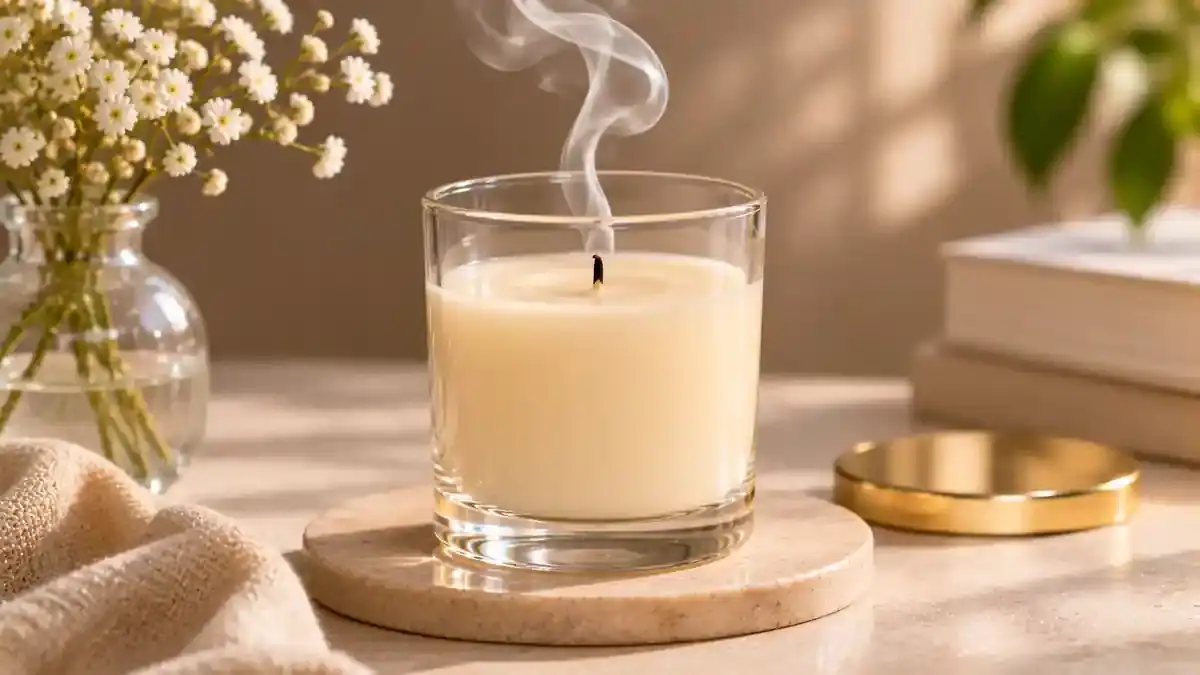
What changes when the flame is extinguished
While the candle burns, the flame helps maintain a hot region near the wick. Heat melts some wax and allows wax-derived molecules to enter the gas phase. Understanding how candle wicks draw liquid wax clarifies how capillary forces keep the braided fibres saturated with molten fuel right up to the moment the flame goes out. In the flame, fuel reacts with oxygen. The energy released sustains the hot region as long as fuel, oxygen and heat are available in the right balance.
A puff of air can disrupt that balance quickly. It displaces and cools the hot gases, and the reaction can no longer sustain the visible flame. The temperature of the wick and nearby wax takes longer to fall. The candle therefore passes through a short period in which the flame is gone but its former fuel supply is still warm enough to release material into the air.
Think about how a metal spoon stays warm after you remove it from hot water. The source of heat has gone, yet the spoon still carries energy it acquired earlier. A wick and its surrounding wax also carry stored heat. They cool continuously after extinction. How much material leaves during that interval depends on the candle, how long it burned and how it was extinguished.
Why the plume becomes visible
Wax vapour in the gas phase and the cloud you can see are different things. As vapour moves into cooler air, some compounds can condense and form very small droplets or particles. Suspended material of this kind is called an aerosol. It scatters light, making the plume visible against a suitable background. The visible cloud can therefore mark a path along which vapour and air have mixed and cooled.
The familiar cloud above a hot drink offers a useful comparison. Water vapour itself is invisible, but droplets formed when moist air cools can make a visible mist. A candle plume can involve wax-related material rather than just water. The analogy helps explain why something that begins in the gas phase can become visible after cooling.
The actual plume can be a mixture. It can contain condensed fuel material and products from the warm wick region. Its appearance alone does not give a complete chemical analysis. Lighting, background and particle concentration change how white, grey or faint it appears. A bright side light against a dark wall can reveal a plume that was already present but difficult to see against a window.
Why candle smoke rises after blowing out
Gases near the wick can remain warmer than the surrounding room air. At comparable pressure, the warmer parcel is generally less dense. Gravity acting on that density difference produces buoyancy, so the warm parcel tends to rise. It carries suspended droplets or particles upward. The movement is chiefly about the surrounding gases, even though it is the tiny suspended material that makes the motion visible.
Airflow changes the route. Examining candle flame airflow science illustrates how both deliberate breaths and subtle indoor drafts steer warm gas columns across a room. The breath used to extinguish the candle can initially push the plume sideways. Once that disturbance subsides, the warmer air can rise again if the room is fairly still. A fan or vent can continue pushing it across the room. This is why a plume may first travel diagonally and then curl up, or simply drift sideways from the point where the flame disappeared.
Some swirls form as the rising column pulls in surrounding air. The plume spreads and its boundary becomes irregular. Its shape records the combined movement of the warm gases and the cooler air around them. The little curves are easier to see than the airflow itself, much as fine mist makes a draft visible.
Why the plume stops
As the wick and wax cool, they lose the ability to release vapour at the same rate. The supply feeding the cloud diminishes. At the same time, room air mixes into the plume and lowers the concentration of suspended material in any one part of it. Together those changes make the trail thinner and harder to see.
The end of visible smoke does not mark a sharp temperature boundary. The wick can still be warm after the plume has become too faint to distinguish. A dark background may show a final faint wisp that disappears against a brighter surface. The observation depends both on what is being released and on whether the eye can separate the plume from its surroundings.
This also explains why the trail can vary between two occasions with the same candle. A short session may leave a different amount of hot wax near the wick than a longer session. The wick can be in a different condition. A stronger puff can change the early shape. The apparent duration also depends on the light and what is behind the candle.
How the extinction plume differs from soot during burning
A yellow flame can contain hot soot particles formed during combustion. Understanding why candles produce black soot explains how oxygen-starved combustion releases dark carbon particles while a candle is actively lit. These particles can glow while they are inside the flame. Some may leave it and appear as dark smoke or settle on a nearby surface. The pale plume after extinction is associated with a different stage. It appears when active flaming has stopped and residual heat can still release wax-related material that cools in the air.
The distinction is useful when describing what you saw. A dark stream rising repeatedly during a burn is a different observation from a brief pale thread immediately after extinguishing. Colour is an imperfect clue, but timing helps. Describe when the plume appeared, whether a flame was present and how long the effect lasted before interpreting it.
A blackened wick is also a separate observation. The wick itself can char, and residue can remain on the tip. A black tip does not tell you what fraction of the pale airborne plume was condensed wax. Likewise, seeing a brief plume does not identify the composition of any residue left on the glass.
What a recorded demonstration can reveal
Watch a close-up recording of a candle being extinguished and divide the event into three stages. First identify the moment the flame disappears. Next follow the first part of the plume and see whether the puff carried it sideways. Finally watch how the trail changes once that immediate movement has subsided. This sequence separates the disturbance of the air from the slower cooling of the wick.
Try comparing two recordings of the same event against different backgrounds. Exploring how light direction changes texture and colour clarifies why side lighting against a dark backdrop makes faint airborne particles stand out clearly. A dark background can make a pale trail easier to see. A bright background may hide all but the densest part. If one recording shows a longer plume, check whether the exposure and lighting are comparable before concluding that the candle produced more visible material.
A recording can show when a plume becomes visible and where it travels. It cannot determine the identity of each airborne compound. For that, researchers would need to collect or sample the plume and use methods that distinguish gases from suspended material. The observation is still informative when its limits are clear.
Key Takeaways
- Residual heat continues vaporising wax: Even after the flame goes out, stored warmth in the wick and melt pool releases wax molecules briefly into the air.
- Cooling turns invisible vapour into a visible aerosol: As warm wax vapour mixes with cooler room air, it condenses into microscopic light-scattering droplets.
- Thermal buoyancy lifts the trail upward: Warm, less-dense air around the wick rises naturally once the sideways force of your breath settles.
- Cooling and air dilution end the plume: Within seconds, falling wick temperatures and room air mixing disperse the cloud until it vanishes.
- The white extinction trail differs from black soot: Condensed pale wax droplets released after blowing out a candle are chemically distinct from dark carbon smoke produced during active burning.
Frequently Asked Questions
Is the pale plume pure wax vapour?
The visible part is associated with suspended droplets or particles that scatter light. Gases can be present in the same plume without being visible. The cloud’s appearance cannot identify every substance in it.
Why does the smoke sometimes travel sideways first?
The air used to extinguish the flame can push the plume sideways. An ongoing draft can continue moving it that way. In stiller surroundings, buoyancy often becomes easier to see as the initial puff fades.
Why can I see the smoke better in side light?
Side light can make suspended material scatter visible light towards you while a darker background provides contrast. The same plume can be difficult to distinguish in front of a bright window.
Does the wick keep burning after the flame goes out?
The wick remains hot briefly, and in some cases a faint glow may persist. A visible plume alone does not show that a flame is present. Residual heat can account for vapour release during cooling.
Why does the cloud disappear so quickly?
The wick and wax cool, reducing the supply of material. Mixing with surrounding air also disperses the droplets or particles. Eventually the remaining cloud becomes too faint to see.
Is the pale trail the same as black soot on a jar?
A pale extinction plume and a dark deposit on glass occur in different places and at different stages. The trail is airborne and temporary. A dark deposit can build up when material from a burning flame reaches a surface.
References: NASA on buoyant flow around flames
About Studio Kinza
Studio Kinza is a Dubai-based artisanal candle studio located in Warsan, International City, crafting clean-burning handcrafted soy candles from non-toxic botanical waxes and fine fragrance oils. Through hands-on workshops, masterclasses, and educational guides, we explore the science behind candle materials, scent, and combustion.
Plan Your Experience
Curious to explore wick sizing, combustion science, and custom fragrance blending in a guided studio setting? Contact the Studio Kinza team to reserve workshop seats, arrange private group sessions, or enquire about bespoke candle experiences in Dubai.

How Light Direction Changes Texture And Colour
How Does Light Direction Change the Appearance of Texture and...
Read More
How Temperature Affects Smell Perception
How Does Temperature Change the Way We Perceive Smell? A...
Read More