
UAE Corporate Gift Ideas for Year-End Client Appreciation A year-end...
Read MoreUAE Corporate Gift Ideas for Year-End Client Appreciation
A year-end gift is a small part of a client relationship, but it can communicate a great deal about how thoughtfully that relationship is managed. A useful, well-presented item with a sincere message often makes more sense than an elaborate package chosen only for its perceived value.
When comparing UAE corporate year end gifts, think beyond the product photograph. Recipient preferences, company policies, delivery arrangements and procurement deadlines all affect whether the gesture is welcome. The best choice is one your organisation can send consistently and your clients can comfortably accept.
This guide focuses on practical client appreciation: choosing gifts, planning branded candles or creative experiences, coordinating approvals and delivering them with the care the relationship deserves.
Begin with the Reason for the Gift
Write down the message you want to convey. You may be thanking clients for collaboration, acknowledging a project milestone or recognising a longstanding partnership. That purpose should shape the gift and its accompanying note.
Avoid making the package carry a sales pitch at the same time. A sincere thank-you loses focus when it includes several promotional requests. Keep the wording connected to the relationship and specific enough to feel considered. You do not need to make large claims about the year or promise future outcomes. A clear expression of appreciation is often more effective than a long message filled with business language.
Check Recipient Policies Early
Some organisations place limits on gifts or require approval before acceptance. Ask your internal team what rules apply and confirm relevant recipient preferences through an appropriate contact. Do this before committing to production, especially for gifts with a high perceived value.
Do not assume that a gift is acceptable because it is seasonal or branded. If a recipient cannot accept a physical item, consider an alternative permitted by both organisations, such as a thoughtful message. This is a practical planning step rather than an occasion to invent a universal policy. Follow the actual requirements attached to each relationship and keep a record of any approval you need.
Build a Recipient List You Can Use
A reliable list includes the intended recipient, organisation, delivery contact and confirmed address. Check whether packages should go to an office, a central reception or another approved location. Avoid using an old address simply because it appeared on last year’s list.
Collect only the information needed for fulfilment and follow your organisation’s data handling practices. Agree who owns corrections and who approves the final list. For multiple contacts at one company, decide whether gifts are individual or shared. This prevents accidental duplication, inconsistent treatment and delivery confusion that could undermine an otherwise thoughtful gesture.
Consider a Handcrafted Candle
A candle can offer a useful object with a personal, sensory element. It may suit clients who enjoy home fragrance, but it is not a universal choice. Think about the recipient’s household, preferences and whether they use scented products.
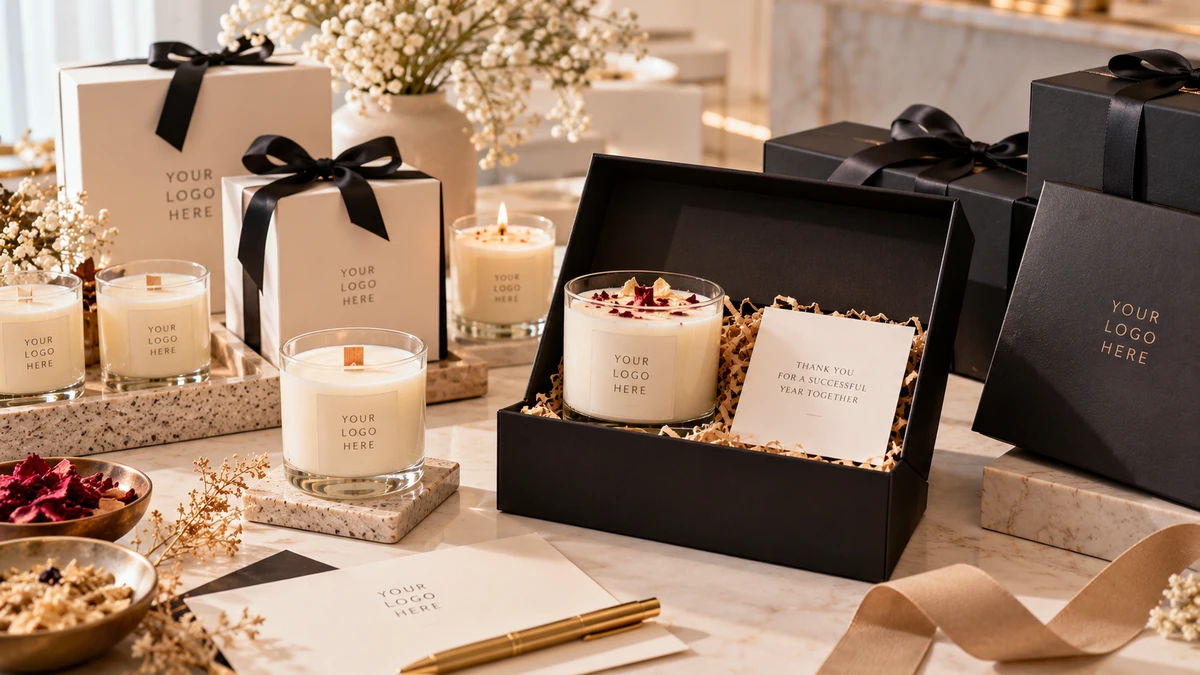
For branded candle gifts, ask the maker about available vessels, fragrance directions, labels, packaging and production timing. Studio Kinza offers an extensive selection of handcrafted soy candles alongside customised corporate arrangements; specifications and minimum quantities need to be confirmed for your request. Choose a balanced design that allows the object to feel welcome at home rather than covered with a large promotional message.
Choose Fragrance with the Recipient in Mind
Fragrance is personal. A distinctive smoky or intensely sweet scent may be enjoyable to one person and uncomfortable to another. If you know a client’s preference, use that information. If you do not, ask the supplier to explain the available directions and the overall impression of each option.
Avoid describing any scent as suitable for everyone. Consider offering a choice where the process allows it, or select a different gift category when fragrance is inappropriate. A sample review can help your team agree on a direction, but your team’s preference does not guarantee the recipient’s response. Keep the gift’s purpose centred on consideration, not on proving your taste.
Make Branding a Supporting Detail
A client gift should still look like something the recipient might want to keep. A small logo, clear label and short appreciation message can be enough. Decide whether the corporate identity belongs on the product, packaging or accompanying card rather than repeating it on every surface.
Ask for artwork specifications and review a proof before production. For executive gifting suites where clients participate in custom fragrance blending, a luxury bespoke candle experience in Dubai provides an elevated standard of personalized craftsmanship. Check logo quality, colour, spelling and alignment. Preserve necessary product and care information. If names are personalised, verify them from the approved recipient list. A restrained design may take just as much planning as a complex one, but it can make the finished item more usable beyond the gifting occasion.
Compare Physical Gifts with Experience Gifts
A creative experience can suit recipients who prefer an activity to another object. A voucher may offer flexibility, while a hosted group session can become an occasion for a client team to spend time together. Exploring hands-on candle making for client appreciation in Dubai allows account managers to build authentic rapport outside traditional meeting rooms. These options need different planning from a delivered package.
Check validity, eligible experiences, transfer conditions and booking availability before purchasing vouchers. Offering an adaptable creative experience gift card gives clients the autonomy to book a session at their own convenience. For a hosted workshop, confirm attendance, timing, venue and the level of privacy expected. Do not assume a client can easily travel or commit to a date. The right experience gift offers genuine convenience and choice rather than transferring an organising task to the person you intended to thank.
Include a Message That Sounds Human
The note often gives the gift its meaning. Mention the collaboration or relationship you are acknowledging and express thanks directly. Keep the message short enough to read easily, particularly if it appears on a small card.
Avoid generic superlatives, exaggerated familiarity or references to confidential projects. If the relationship is formal, a warm professional tone is enough. Decide whether the message comes from an individual, an account team or the company. Review names and sign-off details with the same care as the packaging artwork. A modest gift with an accurate, thoughtful note can feel more personal than an expensive item accompanied by an anonymous greeting.
Plan Production Backwards from Delivery
Start with when the recipient should receive the gift, then work backwards through delivery, packing, production, artwork approval and sample review. Ask the supplier for a realistic schedule based on the actual quantity and customisation, rather than applying an old lead time to a new brief.
Build in room for approval changes and corrections. Custom packaging may follow a different timetable from the candle itself. If the deadline is tight, simplify the scope rather than relying on unconfirmed promises. Agree a final order date, proof deadline and delivery plan in writing. A clear sequence makes procurement easier to manage and reduces avoidable last-minute compromises.
Calculate the Complete Cost per Recipient
Compare quotes using the same specification. Include the product, custom printing, packaging, cards, delivery and applicable tax. Ask about sample charges, minimum quantities and the cost of individual address fulfilment where relevant.
Choose a budget that your organisation can apply consistently. If some clients receive different gifts, make sure the criteria are internally agreed. Do not reduce practical packaging or care information merely to fund an unnecessary decorative detail. The complete cost should support a reliable delivery and a well-presented item. A clear budget also helps the supplier suggest options that fit without repeatedly revising the brief.
Protect the Gift during Delivery
Packaging needs to protect the item, not simply photograph well. Discuss how candles or other delicate products will be secured, identified and delivered. Confirm handling instructions and any storage considerations with the maker.
For office deliveries, check reception hours and whether someone can accept the package. Avoid leaving gifts in conditions the supplier advises against, including unsuitable heat. Decide who follows up on unsuccessful deliveries and whether recipients will be notified. For bulk fulfilment, request a clear record of dispatch and exceptions. The handover is part of the appreciation gesture, so it deserves the same attention as the product selection.
Keep the Follow-Up Light
Once gifts are delivered, a short message can acknowledge the gesture and thank the client again. Do not require a public post, a photograph or a meeting in return. Appreciation should not create an obligation for the recipient.
Internally, review practical outcomes: whether the list was accurate, deliveries succeeded and the supplier met the agreed specification. Keep factual notes for next year’s planning. If a recipient shares a preference, record it appropriately rather than treating silence as approval. The strongest gifting programme improves through careful information and consistent execution, while allowing the relationship to remain more important than the gift itself.
Five Key Takeaways
- Clarify the appreciation message first: Ground your gifting in genuine gratitude before deciding on products or packaging.
- Audit compliance and gifting policies: Verify recipient corporate gift thresholds prior to placing custom production orders.
- Balance branding with utility: Restrain logos and branding so the finished item feels personal rather than promotional.
- Calculate complete door-to-door costs: Account for bespoke printing, safe local logistics, packaging, and VAT upfront.
- Respect recipient autonomy: Never turn appreciation gifts into transactional requests for meetings or social media tags.
Frequently Asked Questions
Are candles suitable for every corporate client?
No gift suits everyone. Consider fragrance preferences, household use and recipient policies. A candle can be thoughtful when those details fit; another category or a simple thank-you may suit a different relationship better.
Can corporate candle gifts be branded?
Ask about available labels, packaging and artwork specifications. Confirm minimum quantities, proofs and production timing directly. Keep branding readable and preserve the product information and care guidance supplied by the maker.
How early should we place a year-end gift order?
Work backwards from the required delivery date using the supplier’s confirmed schedule. Include samples, approvals, custom printing, packing and fulfilment. More customisation usually requires more coordination, but exact lead times vary.
What should a client appreciation card say?
Thank the recipient for a specific aspect of the relationship or collaboration. Keep the message sincere, professional and brief. Avoid confidential details, promotional pressure and exaggerated claims about what the gift represents.
Is an experience voucher better than a physical gift?
It depends on the recipient. Check whether they can use it conveniently and review validity and booking conditions. An experience should offer a welcome choice rather than add planning work to a busy schedule.
What information should we give a candle supplier?
Share quantity, budget, deadline, vessel preferences, fragrance direction, branding and delivery requirements. Ask for a proposal that separates product, customisation, packaging, tax and delivery so approvals are straightforward.
About Studio Kinza
Studio Kinza is an artisanal fragrance house based in Warsan, International City, Dubai, creating premium soy candles formulated with non-toxic botanical waxes and fine fragrance oils. Through our dedicated corporate creative services in the UAE, we partner with leading businesses to deliver bespoke client gifting suites, on-site brand activations, and interactive workshops across Dubai.
Plan Your Experience
Planning your year-end client gifting or executive appreciation campaign? Contact the Studio Kinza team with your projected recipient numbers, branding requirements, preferred scents, and target delivery dates. Our corporate specialists will provide custom proofs, detailed timelines, and volume gifting options tailored to your brand.

How to Choose a Candle-Making Workshop for a Corporate Year-End
How to Choose a Candle-Making Workshop for a Corporate Year-End...
Read More
Autumn Fragrance Notes Candles UAE
Autumn Fragrance Notes for Candles: Choosing a Seasonal Scent in...
Read More
Halloween Activities Adults Dubai Beyond Costumes
Halloween Activities for Adults in Dubai Beyond Costume Parties Halloween...
Read More