

How to Plan a Diwali Candle-Making Get-Together at Home in...
Read MoreThe Psychology of Scent: How Fragrance Affects Mood & Productivity
The Psychology of Scent
Of all our senses, smell has the most direct line to memory and emotion. A single whiff of a particular fragrance can pull up a memory in vivid detail – a place, a person, a specific moment – faster and more completely than a photograph or a song often can. Understanding the psychology of scent isn’t just an interesting piece of trivia; it’s genuinely useful knowledge for anyone thinking about how fragrance shapes mood, focus and the overall feel of a space.
Having spent years formulating fragrance blends and paying close attention to how different scents affect the people testing them in our own studio, we’ve developed a practical, grounded understanding of fragrance psychology that goes beyond the more general claims often made in wellness marketing. This guide covers the science behind why scent affects us so directly, the specific connection between fragrance and mood, how scent influences productivity and which fragrances tend to suit different rooms and purposes.

What Is the Psychology of Scent?
The psychology of scent is the study of how smells can influence memory, emotions, attention and behaviour. Because smell is closely connected with areas of the brain involved in memory and emotion, particular fragrances can trigger personal memories or create associations with relaxation, energy, comfort or focus. However, responses vary from person to person based on experience and context.
In Dubai homes, fragrance can become part of the overall sensory character of an interior. Open-plan living areas, bedrooms, entertaining spaces and home offices may each benefit from different fragrance profiles. Studio Kinza creates hand-poured soy candles in Dubai, giving homeowners a locally crafted option for building a considered home fragrance collection.
Science Behind Fragrance
The reason scent has such an outsized emotional impact comes down to how it’s processed in the brain, differently from our other senses.
A Direct Line to the Emotional Brain
Unlike sight or sound, which are processed through several intermediate steps before reaching areas of the brain associated with emotion and memory, smell has a more direct neural pathway to these regions. This is part of why a specific scent can trigger an emotional or memory response so immediately and vividly, often before we’ve consciously identified what we’re smelling.
The Connection Between Smell and Memory
Scent memories tend to be particularly durable and emotionally vivid compared to memories formed through other senses, a phenomenon well documented in psychological research and something most people recognise intuitively from their own experience – a specific fragrance instantly recalling a childhood home, a particular season, or a specific person.
Individual Variation in Scent Response
While certain broad patterns in fragrance psychology are well established, individual responses to specific scents also vary considerably based on personal associations and past experiences, meaning a fragrance that feels calming to one person might carry an entirely different emotional association for someone else.
Mood and Memory
Fragrance’s connection to memory has a direct, practical influence on emotional state and overall mood.
How Scent Shapes Emotional State
Certain fragrance families are broadly associated with specific emotional effects – lavender and chamomile with relaxation, citrus with uplift and energy, warm spices with comfort and cosiness. While individual response varies, these general associations are consistent enough to inform thoughtful fragrance choices.
Using Scent to Anchor Positive Associations
Consistently using a particular fragrance during positive, relaxing activities – reading, an evening wind-down routine, a weekend morning – can help that scent become associated with those feelings over time, effectively creating a fragrance-based emotional anchor you can return to.
Scent and Stress Response
Certain calming fragrances have a measurable association with reduced physiological markers of stress, which is part of the broader interest in aromatherapy benefits as a complementary, non-pharmaceutical approach to relaxation.
Productivity
Beyond mood and relaxation, fragrance also plays a meaningful role in focus and cognitive performance.
Scents Associated With Alertness and Focus
Certain fragrances – peppermint, rosemary, citrus notes – are commonly associated with increased alertness and improved focus, making them popular choices for productivity scents used in home offices and workspaces.
Reducing Mental Fatigue
Some fragrances are associated with reduced perceived mental fatigue during demanding cognitive tasks, offering a simple, low-effort addition to a productive work environment alongside more conventional strategies like breaks and proper lighting.
Fragrance as Part of a Work Routine
Just as certain scents can be used to anchor relaxation, a consistent fragrance used specifically during focused work sessions can help signal to the brain that it’s time to concentrate, functioning similarly to other routine-based productivity cues like a specific playlist or a dedicated workspace setup.
Best Scents for Every Room
Different rooms benefit from different fragrance approaches, informed by the psychological associations of specific scent families.
Bedroom
Calming fragrances like lavender, chamomile and sandalwood support the relaxation and wind-down function of a bedroom, aligning scent choice with the room’s primary purpose.
Living Room
Warmer, more universally appealing fragrances tend to suit shared living spaces, since they need to work well for a range of moods and occasions rather than serving one specific emotional purpose.
Home Office
Alertness-supporting fragrances like peppermint, rosemary, or citrus notes align well with a workspace’s need for focus and mental clarity.
Bathroom
Fresh, clean fragrances support the bathroom’s association with cleanliness and a quick mental reset, particularly effective in the morning as part of a wake-up routine.
Scent, Sleep and Overall Wellbeing
Beyond mood and productivity specifically, fragrance also plays a role in broader wellness routines, particularly around sleep.
Fragrance as Part of a Wind-Down Routine
Many people incorporate calming fragrances into an evening wind-down routine, using scent as one signal among several – dimmed lighting, reduced screen time, a consistent bedtime – that together help prepare the mind and body for rest.
Scent and Perceived Air Quality
Beyond direct psychological effects, a pleasant, clean-burning fragrance also contributes to how “fresh” and cared-for a space feels, which itself has a secondary, indirect effect on overall comfort and wellbeing within the home.
A Complementary Tool, Not a Standalone Solution
It’s worth noting that fragrance works best as one element within a broader wellness or productivity approach, rather than a standalone solution. Scent can meaningfully support mood and focus, but it complements rather than replaces other foundational habits like adequate sleep, movement and stress management.
How to Choose a Fragrance Based on How You Want to Feel
If you want your space to feel… | Consider |
Calm | Soft floral, lavender, sandalwood |
Energising | Citrus, mint, fresh notes |
Warm | Amber, spice, woods |
Sophisticated | Oud, woods, refined florals |
Fresh | Citrus, green, clean notes |
Cosy | Vanilla, spice, soft woods |
Studio Kinza Candles for Different Moods
Mood / Purpose | Product | Suggested Positioning |
Floral / uplifting | Jasmine Garden | Floral spaces, entryways, daytime ambience |
Soft / comforting | Baby Powder | Bedroom and relaxing spaces |
Deeper / atmospheric | Midnight Mirage | Evening and entertaining spaces |
Woody / oud character | What The Oud | Luxury, richer interiors |
Fresh / energising | Lemongrass Breeze | Morning and daytime spaces |
Building Fragrance Habits With Intention
Understanding fragrance psychology becomes genuinely useful when applied intentionally to daily routines and specific spaces.
Matching Scent to Activity
Rather than using the same fragrance throughout an entire home regardless of activity, matching specific scents to specific functions – energising notes for the morning and workspace, calming notes for the evening and bedroom – makes more deliberate use of fragrance’s psychological effects.
Being Mindful of Overuse
Consistently exposed to the same fragrance over long periods, our sense of smell can become less responsive to it, a phenomenon known as olfactory adaptation. Occasionally rotating or varying fragrances helps maintain their psychological impact rather than fading into the background unnoticed.
Considering Cultural and Personal Associations
Because scent is so closely tied to personal memory, a fragrance that carries positive psychological associations for one person may carry entirely different meanings for another, making personal testing and reflection an important part of building a genuinely effective fragrance routine.
Structuring Fragrance Across the Day
Just as light and activity naturally shift across a day, fragrance can be structured to follow a similar rhythm, supporting different needs at different times.
Morning: Energising and Clarifying
Fresh, citrus-forward, or minty fragrances in the morning can support the transition from waking up to feeling alert and ready to focus, pairing naturally with a morning routine.
Midday: Sustained Focus
Cleaner, less distracting fragrances tend to suit the middle of the day, when the goal is usually sustained concentration rather than a strong emotional shift in either direction.
Evening: Winding Down
Warmer, softer fragrances in the evening support the gradual shift toward relaxation, aligning scent with the body’s natural transition toward rest as the day comes to a close.
Building Your Own Daily Fragrance Rhythm
Not everyone needs or wants to change fragrance multiple times a day, but even a simple two-scent rotation – one for daytime focus, one for evening relaxation – offers a low-effort way to apply fragrance psychology more intentionally.
Explore Fragrances Designed With Intention
Every Studio Kinza candle is thoughtfully formulated using natural soy wax and carefully selected fragrance oils. Explore Studio Kinza Candles to find scents suited to how you actually want each space in your home to feel, whether that’s a calming retreat for the bedroom, an energising boost for your workspace, or a warm, welcoming signature scent for the rooms where you spend the most time entertaining and relaxing.
Key Takeaways
- Smell has a more direct neural connection to emotion and memory than our other senses, explaining its outsized psychological impact.
- Certain fragrance families are broadly associated with specific emotional effects, from relaxation to alertness.
- Scent can be used intentionally to anchor positive associations or support focus during specific activities.
- Different rooms benefit from fragrance choices aligned with their primary psychological function.
- Rotating fragrances helps avoid olfactory adaptation, maintaining their psychological impact over time.
FAQs
1. Why does scent affect mood and memory so strongly?
Smell has a more direct neural pathway to the brain’s emotional and memory centres compared to other senses, which is why fragrance can trigger vivid emotional and memory responses so quickly.
2. What scents are best for relaxation?
Lavender, chamomile and sandalwood are among the fragrances most commonly associated with relaxation and stress reduction.
3. Can fragrance actually improve productivity?
Certain scents, particularly peppermint, rosemary and citrus notes, are commonly associated with increased alertness and focus, making them popular choices for workspaces.
4. Why do some scents remind me of specific memories so vividly?
Scent memories tend to be particularly durable and emotionally vivid due to the direct neural pathway between smell and the brain’s memory and emotion centres.
5. What is olfactory adaptation?
Olfactory adaptation is the reduced awareness of a fragrance after prolonged exposure to it. Rotating scents occasionally can help prevent a familiar fragrance from fading into the background.
6. Does everyone respond to fragrance in the same way psychologically?
No, while broad patterns exist, individual responses to specific scents vary considerably based on personal associations and past experiences.
7. What fragrance is best for a home office?
Alertness-supporting fragrances like peppermint, rosemary, or citrus notes tend to align well with a workspace’s need for focus and mental clarity.
8. Can I use fragrance to help build a relaxation routine?
Yes, consistently using a specific calming fragrance during relaxing activities can help that scent become associated with those feelings over time, creating a useful emotional anchor.
9. Is the psychology of scent the same as aromatherapy?
They’re closely related – aromatherapy specifically refers to the therapeutic use of fragrance, drawing on many of the same psychological and physiological principles behind scent’s broader emotional effects.
10. How can I apply fragrance psychology practically in my home?
Matching specific fragrances to specific rooms and activities – energising scents for workspaces, calming scents for bedrooms – makes more deliberate, effective use of fragrance’s psychological impact than using one scent throughout.
11. Should fragrance change throughout the day, or stay consistent?
Some people benefit from a simple rotation – energising scents in the morning, calming ones in the evening – while others prefer a single consistent signature scent; both approaches can work well depending on personal preference.
12. Can fragrance help with sleep quality?
Calming fragrances used as part of a consistent evening wind-down routine can support the broader set of habits associated with better sleep, though fragrance works best as a complementary tool alongside other good sleep practices rather than a standalone solution.
About Studio Kinza
Studio Kinza is Dubai and Abu Dhabi’s most reviewed candle-making experience – a fragrance house of hand-poured, 100% natural soy candles that began in a home kitchen and now hosts corporate workshops, private celebrations and candle-making classes for groups of two to thirteen hundred. Every candle-making experience is made with clean, natural fragrance, backed by 350+ five-star Google reviews and trusted by some of the UAE’s most respected brands.
Studio Kinza’s perspective: Our fragrance recommendations are informed by hands-on experience developing fragrance blends and creating candle experiences in Dubai for private celebrations, corporate gatherings and luxury events.
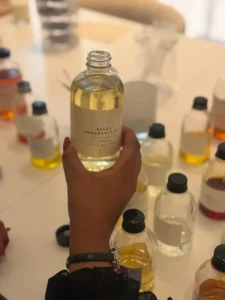
Diwali Candle Gifts Dubai
Diwali Candle Gifts in Dubai: Thoughtful Ideas for Hosts, Friends...
Read More
Alternative Birthday Party Ideas For Teens Who Want Something Different
Alternative Birthday Party Ideas for Teens Who Want Something Different...
Read More
Teen Birthday Celebration In Dubai Make Your Own Scented Candle
Teen Birthday Celebration in Dubai: Make Your Own Scented Candle...
Read More