
Alternative Birthday Party Ideas for Teens Who Want Something Different...
Read MoreCandle Making Basics: How to Choose the Right Wick for a Homemade Candle
Getting candle making right often comes down to one small, easy-to-overlook component: the wick. Choose the wrong one and even a beautifully scented, perfectly poured candle can tunnel down the middle, drown in its own wax pool, or throw far less scent than it should. Choosing the right wick is one of the most important pieces of candle making equipment a beginner needs to understand before their first pour.
Most new candle makers assume any wick will do, as long as it’s roughly the right length. In reality, wick selection depends on several interacting factors — wax type, fragrance load, vessel diameter, and even the dye used — and getting even one of these wrong can throw off the burn. The good news is that once you understand what a wick actually does, choosing correctly becomes far less intimidating.
This guide breaks wick selection down into practical, beginner-friendly steps: what a wick actually does, how different materials and sizes behave, how your wax and vessel affect the right choice, and how to test and troubleshoot once your candle is poured.
What Does a Wick Actually Do?
Before choosing a wick, it helps to understand its job beyond simply “burning.”
Drawing Melted Wax Upward
A wick’s core function is capillary action — drawing liquid wax up through its fibres to fuel the flame. A wick that’s too thin can’t draw enough wax, causing the flame to drown; too thick, and it draws more than it can burn cleanly.
Controlling the Size and Heat of the Flame
Wick diameter and material directly determine flame size and heat output. This heat is what creates the melt pool responsible for releasing fragrance, so wick choice and scent throw are closely connected.
Maintaining an Even Melt Pool
A correctly sized wick melts wax evenly out to the edges of the vessel with each burn, preventing candle tunneling that wastes fragrance and wax left clinging to the container walls.
What Types of Wicks Are Available?
Wicks come in several distinct constructions, each suited to different waxes and burn characteristics.
Cotton Wicks (Braided and Flat)
Braided cotton wicks are a reliable, widely available default, particularly for soy and other natural waxes. They burn predictably and are easy to source in a range of sizes.
Wood Wicks
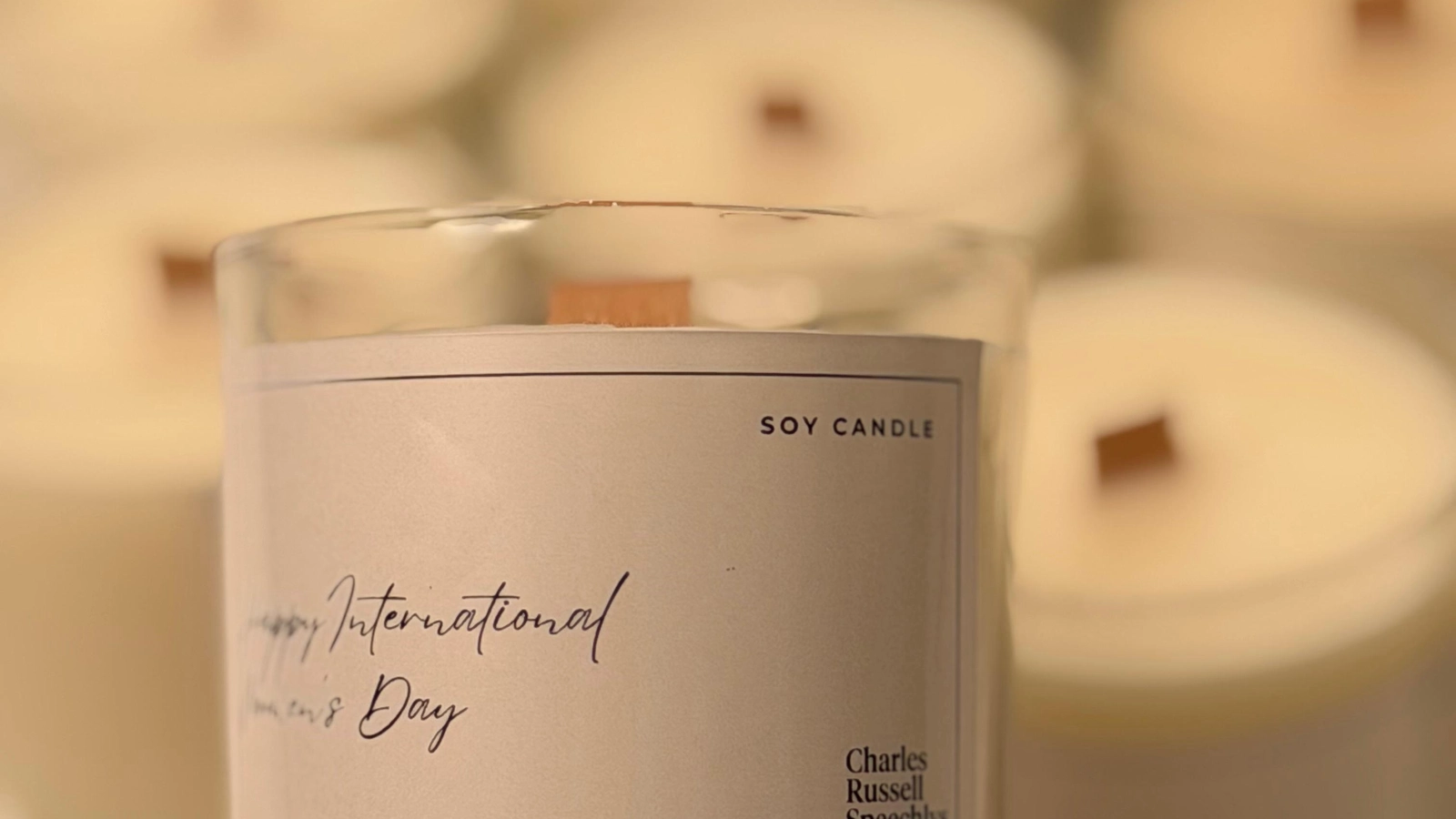
Wood wicks produce a distinctive crackling sound and a wider, more diffused flame. They generally require slightly different vessel and wax pairings than cotton wicks and are popular for their ambience rather than purely for performance.
Cored Wicks (Zinc or Cotton-Core)
Cored wicks include a rigid core to help the wick stand upright through the burn, which is particularly useful in wider vessels or with softer waxes prone to drooping.
How Does Wax Type Affect Wick Selection?
Wick size isn’t universal — it needs to match the specific wax being used.
Soy Wax Generally Needs a Slightly Larger Wick
Because soy wax burns cooler than paraffin, it typically needs a slightly larger wick to generate enough heat for a full melt pool. This is one reason soy candle makers can’t simply reuse paraffin wick charts.
Paraffin Wax Often Burns Hotter With the Same Wick Size
Paraffin’s naturally hotter burn means the same wick size that suits soy may run too hot in a paraffin blend, risking soot or an oversized flame.
Wax Blends Require Their Own Testing
A soy-coconut or soy-paraffin blend behaves differently from either pure wax, so wick size for blended waxes is rarely a simple average — it needs its own dedicated test burn.
How Does Vessel Size Affect Wick Choice?
The size and shape of the container is just as important as the wax inside it.
Wider Vessels Generally Need Larger or Multiple Wicks
As vessel diameter increases, a single wick often can’t melt wax evenly out to the edges, which is why wider candles frequently use two or three wicks positioned across the surface.
Vessel Material Affects Heat Retention
Glass, ceramic, and metal all retain and conduct heat differently, subtly affecting how a given wick performs even at an identical diameter.
Candle Height Matters Too
A tall, narrow vessel behaves differently from a short, wide one even at the same diameter, since flame height and heat retention change with candle depth.
Explore Studio Kinza’s Hands-On Approach
Instead of testing wick and wax combinations alone through trial and error, many beginners find it faster to learn hands-on. A guided candle-making workshop at Studio Kinza walks participants through professional wick selection in real time, using pre-tested combinations that take the guesswork out entirely.
How Do Fragrance and Dye Affect Wick Performance?
Additives beyond wax and wick also shift the equation.
Fragrance Oil Can Change Burn Temperature
Adding fragrance oil — particularly at a higher load — can thicken the wax slightly and affect how it burns, sometimes requiring a slightly larger wick to compensate.
Dye Can Affect Flame Clarity
Heavily dyed candles occasionally show more soot or a smaller flame, since dye particles can interfere subtly with the wick’s draw.
Testing With Your Actual Recipe Matters Most
Because both fragrance and dye affect burn behaviour, the only reliable way to confirm a wick choice is to test-burn the exact final recipe — wax, fragrance load, dye, and vessel together — rather than relying on a generic wick chart alone.
How Do You Test and Troubleshoot a Wick Choice?
Once poured, a test burn tells you almost everything you need to know.
What a Proper Test Burn Looks Like
Burn the candle for three to four hours and check whether the melt pool reaches the edges of the vessel without excessive smoke, sooting, or a flame that’s too tall.
Signs the Wick Is Too Small
A wick that’s too small produces tunnelling — a narrow well of melted wax surrounded by unburned wax at the edges — along with a small, weak flame.
Signs the Wick Is Too Large
An oversized wick produces a tall, flickering flame, visible soot on the vessel walls, and a melt pool that’s too deep too quickly.
Choosing Candle Making Equipment With Confidence
If you’re ready to build your candle-making skills further, our candle-making kit includes pre-tested wicks matched to the wax and vessel combination, removing the guesswork covered in this guide.
What Are Common Wick Sizing Mistakes to Avoid?
Even with the right theory in mind, a few practical mistakes trip up most beginners during their first few pours.
Relying Only on a Generic Wick Chart
A wick sizing chart is a useful starting point, but it’s calibrated against a specific wax and vessel combination — applying it directly to a different wax blend or an unusual vessel shape without a test burn is one of the most common early mistakes.
Changing One Variable Without Retesting
Swapping fragrance oil, dye, or even the batch of wax without re-testing the wick is a frequent cause of inconsistent results, since any of these changes can subtly shift how a wick performs.
Judging a Wick After Only One Burn
A single short burn doesn’t reveal the full picture — tunnelling and sooting often only become apparent after a full three-to-four-hour burn, or sometimes only after a second or third burn cycle.
How Do Multi-Wick Candles Change the Approach?
Wider vessels frequently call for more than one wick, which introduces a few additional considerations beyond single-wick sizing.
Spacing Wicks Evenly Across the Surface
Multiple wicks need to be spaced evenly to melt the surface consistently; uneven spacing can create pockets of unmelted wax between the flames.
Choosing a Smaller Size Per Wick
When using multiple wicks, each individual wick is typically sized smaller than a single wick would be for the same vessel, since the combined heat output needs to stay balanced rather than compounding excessively.
Testing the Full Multi-Wick Setup Together
A multi-wick candle should always be tested as a complete set rather than assuming that a wick size that works well alone will behave identically once several are burning together in the same vessel.
Key Takeaways
- A wick’s core function is drawing melted wax upward through capillary action to fuel an even flame.
- Soy wax generally needs a slightly larger wick than paraffin because it burns cooler.
- Wider vessels typically need a larger wick or multiple wicks to melt evenly out to the edges.
- Fragrance load and dye can both subtly affect burn performance, so testing your exact final recipe matters.
- A proper test burn of three to four hours reveals whether tunnelling, sooting, or an oversized flame signal the wrong wick choice.
FAQs
1. What does a wick do?
A wick draws melted wax upward through capillary action to fuel the flame, and its size determines flame heat, melt pool depth, and overall burn quality.
2. How is wick size chosen?
Wick size is chosen based on wax type, vessel diameter, fragrance load, and dye, then confirmed through a test burn of the finished recipe.
3. Does wax affect wick choice?
Yes, soy wax generally needs a slightly larger wick than paraffin because it burns cooler and needs more heat to melt evenly.
4. Can I use the same wick size for every candle I make?
No, wick size needs to be reassessed for every combination of wax, vessel, and fragrance load, since each variable changes how the wick performs.
5. What happens if my wick is too small?
A too-small wick causes tunnelling, where wax melts only down the centre and unburned wax remains stuck to the vessel walls.
6. What happens if my wick is too large?
An oversized wick produces a tall, flickering flame, visible soot, and an overly deep, fast-forming melt pool.
7. Do wood wicks need different sizing than cotton wicks?
Yes, wood wicks generally require different vessel and wax pairings than cotton wicks, since they produce a wider, more diffused flame.
8. Why does vessel width matter for wick choice?
Wider vessels need more heat spread across the surface to melt evenly, which is why they often require a larger wick or multiple wicks.
9. Does fragrance oil change which wick I should use?
It can — a higher fragrance load sometimes thickens the wax enough to require a slightly larger wick to maintain a clean burn.
10. What’s the best way to confirm a wick choice before making a full batch?
Pour a single test candle with your exact final recipe and burn it for three to four hours, checking for tunnelling, sooting, or an oversized flame.
About Studio Kinza
Studio Kinza is Dubai and Abu Dhabi’s most reviewed candle-making experience — a fragrance house of hand-poured, 100% natural soy candles that began in a home kitchen and now hosts corporate workshops, private celebrations, and candle-making classes for groups of two to thirteen hundred at its International City, Warsan studio. Every candle-making experience is made with clean, natural fragrance, backed by 350+ five-star Google reviews and trusted by some of the world’s most respected brands.

Teen Birthday Celebration In Dubai Make Your Own Scented Candle
Teen Birthday Celebration in Dubai: Make Your Own Scented Candle...
Read More
Creative Birthday Party Ideas for 13–17 Year Olds in Dubai
Creative Birthday Party Ideas for 13–17 Year Olds in Dubai...
Read More
How to Plan a Candle Making Birthday Celebration for Teens
How to Plan a Candle Making Birthday Celebration for Teens...
Read More