
How to Plan a Diwali Candle-Making Get-Together at Home in...
Read MoreCandle Making Supplies Checklist: Everything You Need to Get Started
Standing in front of a craft supply aisle or scrolling through an online candle-making shop for the first time can be genuinely overwhelming – dozens of wax types, wick sizes, fragrance oils and tools, most of it unlabelled in a way that makes sense to a complete beginner. Having a clear candle making supplies checklist strips away that overwhelm, giving you exactly what you need to get started without over-buying or, worse, missing something essential halfway through your first pour.
Having sourced and tested candle-making materials extensively for our own workshops and formulations, we’ve put together a checklist that reflects what actually matters for a first-time candle maker, distinguishing genuinely essential items from optional extras that can wait until you’re more experienced.
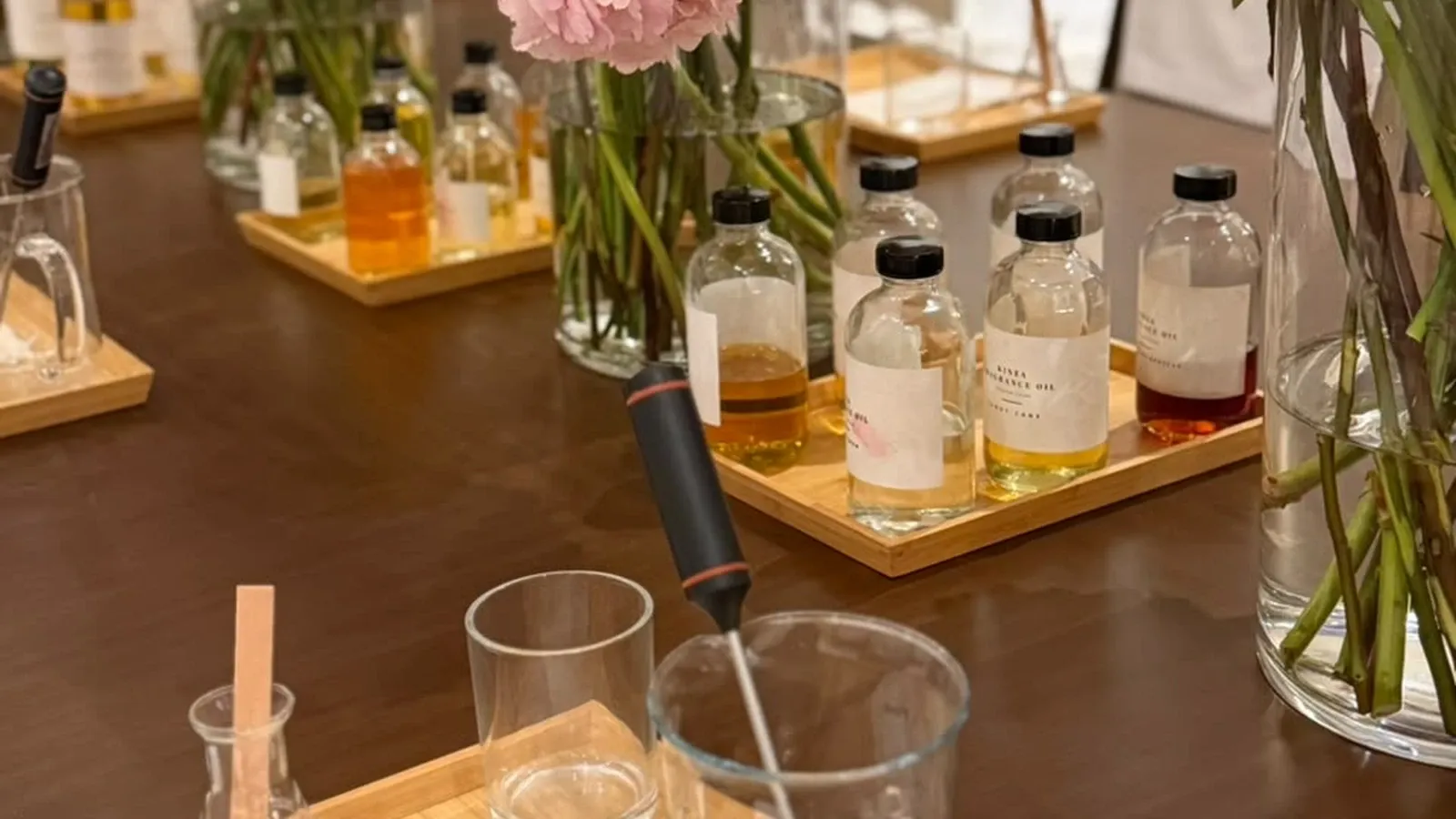
Essential Materials
These are the non-negotiable supplies you’ll need for even the most basic candle-making session.
Wax
The foundation of any candle wax should be chosen based on your priorities – soy wax is widely recommended for beginners, given its forgiving handling and clean burn, though other options exist for those wanting to experiment further down the line.
Wicks
Correctly sized wicks, matched to your container’s diameter, are essential for even burning. Pre-tabbed wicks with a metal base are particularly beginner-friendly, since they’re easier to position and secure.
Fragrance Oils
A candle-specific fragrance oil, formulated to hold up properly within wax rather than an oil designed for another application like soap or diffusers, is essential if you want your finished candles to actually smell like anything once cooled.
Containers or Moulds
Heat-resistant glass jars, tins, or dedicated candle moulds give your melted wax somewhere to set. As a beginner, starting with simple glass jars is usually the most forgiving option.
A Reliable Heat Source
A double boiler setup (a heatproof pouring pitcher set inside a pot of simmering water) or a dedicated wax melter both work well for melting wax safely and evenly.
A Thermometer
Monitoring wax temperature accurately throughout the melting and pouring process is one of the most important habits in candle making, making a reliable thermometer an essential rather than optional tool.
Stirring and Pouring Tools
A dedicated stirring utensil and a pouring pitcher with a spout give you the control needed for even mixing and clean, mess-free pouring.
Optional Tools
These items aren’t strictly necessary for a first attempt, but they make the process noticeably smoother as you continue.
Wick Centring Tools
While a simple pencil laid across the container works fine for keeping a wick centred during pouring, a dedicated wick centring tool offers a bit more precision, particularly useful once you’re making multiple candles at once.
A Kitchen Scale
Weighing wax and fragrance oil, rather than estimating by volume, produces more consistent results across multiple candles and is particularly useful once you start following more precise fragrance load percentages.
Heat-Resistant Gloves
For those working with larger quantities or higher-temperature waxes, heat-resistant gloves add an extra layer of safety when handling hot containers or equipment.
Colour Dyes
If you want to add colour to your candles, dedicated candle dyes (rather than general craft dyes, which may not be formulated correctly for wax) let you customise the finished look of your candles.
A Heat Gun
A heat gun helps smooth out any surface imperfections after a candle has cooled, giving a more polished, professional finish to the top of the candle.
Budget Guide
Candle making supplies span a fairly wide price range and understanding where to spend and where to save helps beginners get started without overcommitting.
Where to Invest
Quality wax and fragrance oil are worth prioritising in your budget, since these two elements have the most direct impact on how your finished candles actually perform and smell.
Where You Can Save
Basic tools like stirring utensils and pouring pitchers don’t need to be candle-specific or expensive – many households already have suitable equivalents, or inexpensive versions work just as well as premium options.
Estimating Startup Costs
A reasonable starting budget for candle making materials covering wax, wicks, a modest fragrance oil selection and a few containers, without any specialised equipment, is generally achievable without a significant upfront investment, particularly if you already have basic kitchen tools that can double as candle-making equipment.
Storing and Maintaining Your Supplies
A little care in how you store leftover materials extends their usable life and keeps your setup ready for the next batch.
Storing Wax
Unused wax should be kept in a cool, dry place, away from direct sunlight or excessive heat, which can affect its texture and consistency before you’re ready to use it.
Storing Fragrance Oils
Fragrance oils are sensitive to light and temperature and are best kept in dark glass bottles, sealed tightly, away from heat sources to preserve their scent quality over time.
Keeping Wicks Organised
Sorting wicks by size, whether in labelled bags or a small storage container, saves considerable time and confusion when you’re ready to start your next candle.
Cleaning and Reusing Equipment
Pouring pitchers and stirring tools can generally be cleaned with hot, soapy water once any residual wax has cooled and been wiped away, allowing you to reuse the same equipment for future batches rather than needing new tools each time.
Beginner Kits
For those who’d rather not source everything individually, pre-assembled beginner kits offer a convenient starting point.
What Beginner Kits Typically Include
Most beginner candle making kit options bundle wax, a small selection of wicks, one or two fragrance oils and basic containers together, giving new candle makers everything needed for a first attempt without individual sourcing.
Pros and Cons of Starting With a Kit
Kits remove the guesswork of matching compatible materials, which is genuinely helpful for a first attempt, though they typically offer less choice in fragrance and wax type compared to sourcing supplies individually once you know your preferences.
When to Graduate to Individual Sourcing
Once you’ve completed a few candles from a beginner kit and have a clearer sense of your preferred wax type, fragrance style and container aesthetic, sourcing supplies individually gives you far more control and customisation for future batches.
Where to Buy
Knowing where to source quality supplies matters as much as knowing what to buy.
Specialist Craft Suppliers
Dedicated candle-making suppliers typically offer the widest range of wax types, wick sizes and fragrance oils, along with more detailed guidance on compatible pairings than general craft stores.
General Craft Stores
For beginners just wanting to try a single candle before committing further, general craft stores often carry basic starter supplies, though the range and quality guidance may be more limited than a specialist supplier.
Learning From a Guided Workshop First
For those unsure where to even begin, attending a guided workshop before buying any supplies independently offers hands-on exposure to quality materials and proper technique, which can meaningfully inform smarter purchasing decisions afterward.
Get Everything You Need in One Place
Skip the guesswork of sourcing supplies individually – join a guided session where all materials are provided and you’ll get hands-on experience with quality wax, wicks and fragrance from your very first candle. Explore Home Workshops to get started.
Key Takeaways
- Essential candle making supplies include wax, wicks, fragrance oil, a container, a heat source and a thermometer.
- Optional tools like a kitchen scale, wick centring tool and heat gun improve consistency and finish as you progress.
- Prioritising quality wax and fragrance oil in your budget has the biggest impact on how your finished candles perform.
- Beginner kits offer a convenient, low-guesswork starting point before graduating to individually sourced supplies.
- Specialist craft suppliers generally offer better guidance and a wider range than general craft stores.
FAQs
- What are the essential supplies needed to start candle making?
At minimum, you’ll need wax, wicks, fragrance oil, a container, a reliable heat source and a thermometer to monitor temperature.
- Is a beginner candle making kit worth buying?
Yes, for a first attempt, a kit removes the guesswork of sourcing compatible materials individually, though it typically offers less customisation than sourcing supplies yourself once you know your preferences.
- How much does it cost to start candle making?
A modest starting budget covering wax, wicks, a small fragrance selection and basic containers is generally achievable without significant upfront investment, particularly if you already have suitable kitchen tools.
- Do I need a thermometer for candle making?
Yes, monitoring wax temperature accurately is one of the most important habits in candle making, making a thermometer an essential rather than optional tool.
- What wax is best for a beginner’s first candle-making attempt?
Soy wax is widely recommended for beginners, given its forgiving handling, good scent throw and easier cleanup compared to other wax types.
- Where can I buy quality candle making supplies?
Specialist craft suppliers generally offer the widest range and best guidance, though general craft stores can work for a simple first attempt.
- Do I need special tools, or can I use household items?
Many basic tools like stirring utensils and pouring pitchers can be substituted with household equivalents, though a dedicated thermometer and appropriately sized wicks are genuinely necessary rather than optional.
- What’s the difference between a candle making kit and buying supplies individually?
A kit bundles pre-matched, compatible materials together for convenience, while individual sourcing offers more choice and customisation once you have a clearer sense of your preferences.
- Should beginners take a workshop before buying their own supplies?
It can be genuinely helpful, since hands-on exposure to quality materials and proper technique in a guided setting often informs smarter, more confident purchasing decisions afterward.
- What optional tools are worth adding once I’m past my first few candles?
A kitchen scale for precise measuring, a wick centring tool and a heat gun for smoothing the finished surface are all worthwhile additions as you progress beyond beginner-level candle making.
- How should I store leftover wax and fragrance oil between candle-making sessions?
Wax should be kept cool and dry away from sunlight, while fragrance oils are best stored in sealed, dark glass bottles away from heat, both of which help preserve quality until your next session.
- Can I reuse candle-making equipment like pouring pitchers and stirring tools?
Yes, once thoroughly cleaned with hot, soapy water after any residual wax has cooled, most equipment can be reused across multiple batches without needing replacement.
About Studio Kinza
Studio Kinza is Dubai and Abu Dhabi’s most reviewed candle-making experience – a fragrance house of hand-poured, 100% natural soy candles that began in a home kitchen and now hosts corporate workshops, private celebrations and candle-making classes for groups of two to thirteen hundred. Every candle-making experience is made with clean, natural fragrance, backed by 350+ five-star Google reviews and trusted by some of the UAE’s most respected brands.
Diwali Candle Gifts Dubai
Diwali Candle Gifts in Dubai: Thoughtful Ideas for Hosts, Friends...
Read More
Alternative Birthday Party Ideas For Teens Who Want Something Different
Alternative Birthday Party Ideas for Teens Who Want Something Different...
Read More
Teen Birthday Celebration In Dubai Make Your Own Scented Candle
Teen Birthday Celebration in Dubai: Make Your Own Scented Candle...
Read More