

How to Plan a Diwali Candle-Making Get-Together at Home in...
Read MoreWhy Does Candle Wax Melt? The Science Behind Candle Making
Candle wax melting seems like a simple, almost invisible part of lighting a candle, but there’s genuine science behind exactly how and why it happens – and understanding it explains a surprising amount about performance differences between waxes in candle making. From melting point to cooling behaviour, the physical properties of wax shape nearly every aspect of how a finished candle burns.
This guide breaks down the science behind wax melting in approachable terms, covering why different waxes melt at different temperatures, what happens during cooling and why this all matters for anyone making or choosing candles.
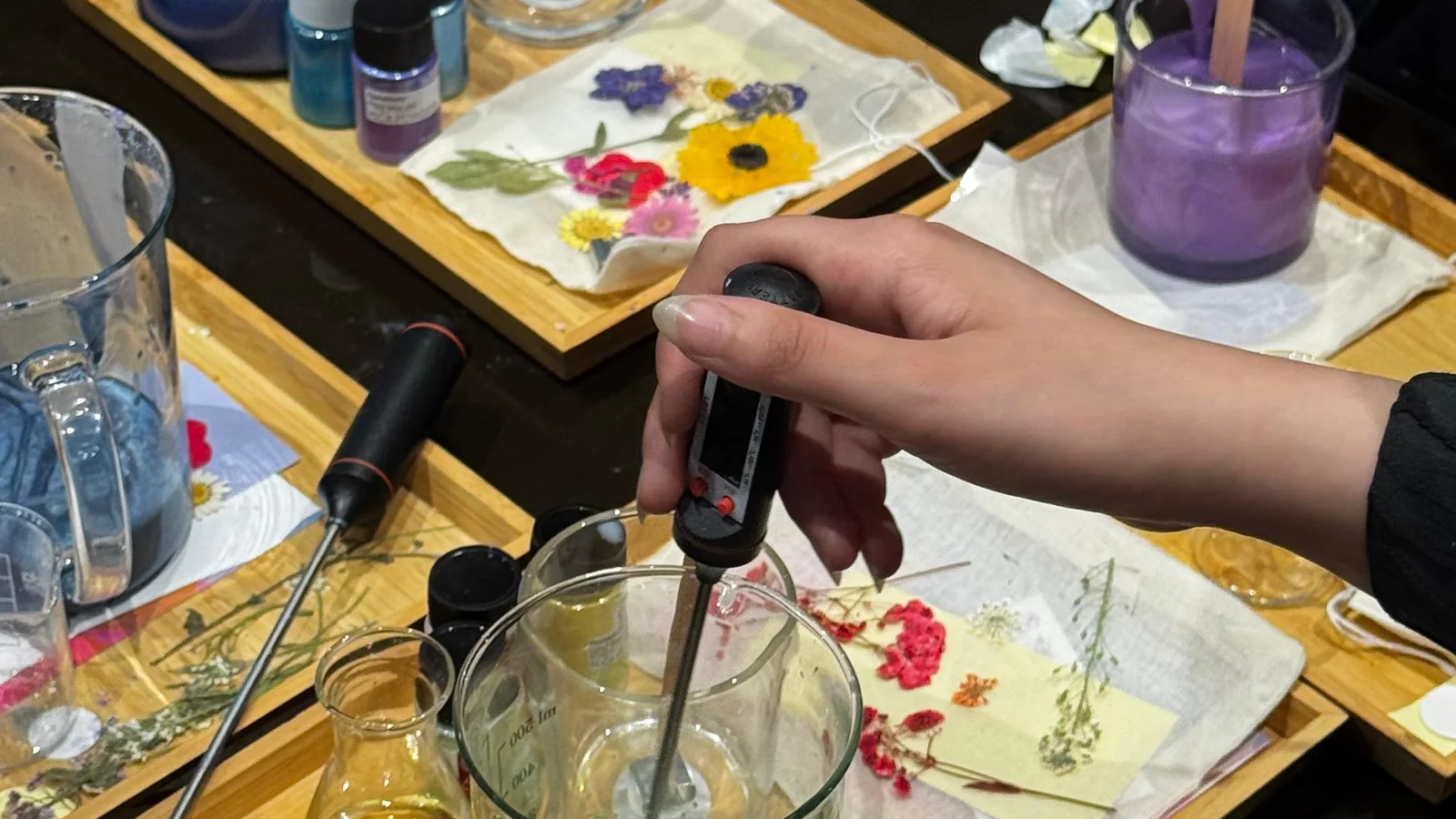
What Is Melting Point and Why Does It Matter?
Before looking at individual waxes, it’s worth understanding this foundational concept.
A Simple Physical Property
Melting point is the specific temperature at which a solid wax transitions into a liquid state – a defined physical property that varies meaningfully between different wax types.
Why Melting Point Affects Burn Behaviour
A wax’s melting point directly influences how much heat a wick needs to generate to create a proper melt pool, which is why wick sizing has to account for wax type, as covered in wick selection guidance.
Melting Point vs. Flash Point
Melting point shouldn’t be confused with flash point – the much higher temperature at which wax vapour can ignite – melting point refers specifically to the solid-to-liquid transition relevant to everyday candle burning.
Why Do Different Waxes Melt Differently?
Not all candle waxes behave the same way once heat is applied and the reasons come down to their underlying chemical structure. When comparing soy wax vs paraffin wax, their distinct crystal structures dictate noticeable differences in burn temperature and rate.
Soy Wax’s Lower Melting Point
Soy wax, derived from soybean oil, generally has a lower melting point than paraffin, which is one reason soy candles typically need a slightly larger wick to generate sufficient heat.
Paraffin Wax’s Higher Melting Point
Paraffin, a petroleum-derived wax, generally has a higher melting point and burns hotter, which affects both wick requirements and how quickly a melt pool forms.
Wax Blends Melt as a Composite
Blended waxes – such as soy-coconut or soy-paraffin combinations – don’t melt at a single simple average temperature but behave as a composite, requiring their own dedicated testing to understand fully.
What Happens During the Melting Process Itself?
Understanding the physical process helps explain what’s actually happening inside a burning candle.
Heat From the Flame Creates a Localised Melt Pool
As the wick burns, the heat it generates melts the wax immediately surrounding it, creating a localised pool of liquid wax rather than melting the entire candle at once.
Capillary Action Draws Liquid Wax Upward
The melted wax is drawn up through the wick via capillary action, where it vaporises and fuels the flame – a continuous cycle that sustains the burn.
Melt Pool Depth Reflects Wick and Wax Balance
A properly balanced wick and wax combination produces a melt pool that reaches the edges of the vessel at an appropriate rate, neither tunnelling narrowly nor melting excessively fast.
Why Do Different Waxes Melt Differently in Practice?
Beyond the underlying chemistry, several other real-world factors influence melting behaviour.
Additives Can Shift Melting Behaviour
Fragrance oil and dye, both discussed in earlier guides, can subtly affect how a wax melts, sometimes requiring a slightly adjusted wick size to compensate.
Ambient Room Temperature Plays a Role
A candle burning in a warmer room will generally reach and maintain a proper melt pool more easily than the same candle in a cold room, echoing the environmental effects covered in scent throw discussions.
Vessel Material Affects Heat Distribution
As with scent throw, vessel material affects how heat is retained and distributed, subtly influencing how evenly wax melts across the surface.
Learn the Science Hands-On
Understanding wax science in theory is useful, but watching it happen in real time – pouring wax, observing the melt pool form and comparing different waxes side by side – makes the concept far more intuitive. Our candle-making workshop gives participants a genuinely hands-on look at how different waxes behave.
What Happens During Cooling?
The science doesn’t end once the flame is extinguished – cooling behaviour matters too.
Wax Returns to a Solid State as It Cools
As melted wax cools below its melting point, it re-solidifies, though this transition isn’t always perfectly even, which is why cooling speed can affect the final surface texture.
Cooling Speed Affects Surface Texture
Wax that cools too quickly can develop an uneven or sunken surface, sometimes called “frosting” or “sinkholes,” while a slower, more controlled cooling process generally produces a smoother finish.
Why This Matters for Candle Makers Specifically
Understanding cooling behaviour helps candle makers troubleshoot common candle mistakes, such as uneven tops or cracking, which often trace back to how quickly a candle was allowed to cool after pouring.
Explore Different Wax Types Yourself
Ready to see how melting point and wax composition affect a finished candle firsthand? Browse our candle types explained guide for a deeper comparison across soy, beeswax, paraffin and blended waxes.
Why Does Wax Chemistry Matter Beyond Melting Point?
Melting point is one of the more visible properties of wax, but the underlying chemistry shapes several other characteristics worth understanding.
Molecular Structure and Hardness
A wax’s molecular structure – how its hydrocarbon or triglyceride chains are arranged – influences not just melting point but also hardness, which in turn affects how a candle holds its shape and how it feels to the touch.
Why Some Waxes Shrink More Than Others During Cooling
Different waxes shrink by different amounts as they cool and solidify, which is why some candles pull slightly away from the vessel wall while others adhere closely – a property directly tied to the same underlying chemistry that determines melting point.
How Chemistry Connects to Sustainability Considerations
Plant-based waxes like soy are derived from renewable agricultural sources, while paraffin is petroleum-derived, a distinction that ties directly back to the wax’s chemical origin and is a genuine factor for environmentally conscious buyers.
What Does This Mean for Choosing a Wax Type?
Bringing the science back to a practical decision helps tie the whole topic together.
Matching Wax Chemistry to Your Priorities
Understanding melting point, burn behaviour and cooling characteristics allows for a genuinely informed choice between soy, paraffin, beeswax, or a blend, rather than choosing based on price or availability alone.
Why Professional Candle Makers Test Extensively
Because these properties interact in complex ways, professional candle makers typically run extensive test burns across multiple wax and wick combinations before finalising a recipe for production.
Applying This Knowledge as a Beginner
Even without professional-level testing resources, understanding the basic science covered here gives beginners a genuinely useful framework for troubleshooting and improving their own candle-making results.
Key Takeaways
- Melting point is the specific temperature at which a solid wax transitions to liquid and it varies meaningfully between wax types.
- Soy wax generally has a lower melting point than paraffin, which is why soy candles typically need a slightly larger wick.
- Melted wax is drawn upward through the wick via capillary action, sustaining the flame in a continuous cycle.
- Fragrance oil, dye, room temperature and vessel material can all subtly affect how a wax melts in practice.
- Cooling speed after pouring affects surface texture, with faster cooling sometimes causing frosting or sinkholes.
FAQs
1. Why does wax melt?
Wax melts because heat from the wick’s flame raises the surrounding wax above its melting point, transitioning it from a solid to a liquid state.
2. Why do different waxes melt differently?
Different waxes have different underlying chemical structures, giving each one – soy, paraffin, or a blend – its own distinct melting point.
3. What happens during cooling?
As melted wax cools below its melting point, it re-solidifies and how quickly it cools affects the final surface texture.
4. Does soy wax melt at a lower temperature than paraffin?
Yes, soy wax generally has a lower melting point than paraffin, which is one reason it typically requires a slightly larger wick.
5. What’s the difference between melting point and flash point?
Melting point is the solid-to-liquid transition temperature, while flash point is the much higher temperature at which wax vapour can ignite.
6. Can fragrance oil affect how wax melts?
Yes, fragrance oil can subtly affect melting behaviour, sometimes requiring a slightly adjusted wick size to compensate.
7. Why does my candle have an uneven or sunken top after cooling?
This is often caused by cooling too quickly, a cosmetic issue sometimes called frosting or sinkholes.
8. Does room temperature affect how a candle melts while burning?
Yes, a candle burning in a warmer room generally reaches and maintains a proper melt pool more easily than one in a cold room.
9. How does melted wax reach the flame?
Melted wax is drawn upward through the wick via capillary action, where it vaporises and fuels the flame.
10. Do wax blends melt at a simple average of their component waxes?
No, blended waxes behave as a composite rather than a simple average, requiring their own dedicated testing to understand fully.
About Studio Kinza
Studio Kinza is Dubai and Abu Dhabi’s most reviewed candle-making experience – a fragrance house of hand-poured, 100% natural soy candles that began in a home kitchen and now hosts corporate workshops, private celebrations and candle-making classes for groups of two to thirteen hundred at its International City, Warsan studio. Every candle-making experience is made with clean, natural fragrance, backed by 350+ five-star Google reviews and trusted by some of the world’s most respected brands.
Diwali Candle Gifts Dubai
Diwali Candle Gifts in Dubai: Thoughtful Ideas for Hosts, Friends...
Read More
Alternative Birthday Party Ideas For Teens Who Want Something Different
Alternative Birthday Party Ideas for Teens Who Want Something Different...
Read More
Teen Birthday Celebration In Dubai Make Your Own Scented Candle
Teen Birthday Celebration in Dubai: Make Your Own Scented Candle...
Read More