

How to Plan a Diwali Candle-Making Get-Together at Home in...
Read MoreFragrance for Candle Making: How to Layer Scents Without Making the Blend Overwhelming
Combining two or more scents is one of the more creative parts of fragrance for candle making, but it’s also where beginners most often go wrong — ending up with a candle fragrance that feels muddled rather than intentional. Layering fragrances well is a genuine skill, but it’s built on a handful of principles that make the process far more predictable than pure trial and error.
This guide walks through how many fragrances to combine, which scent families pair naturally, and how to test and refine a blend before committing to a full batch.
Why Layer Fragrances at All?
Before diving into technique, it’s worth understanding what layering actually achieves.
Creating Depth a Single Note Can’t Achieve
A single fragrance oil, however well-chosen, tends to smell somewhat flat compared to a thoughtfully layered blend, which can offer a top note, a middle note, and a base note that unfold over the course of the burn.
Differentiating a Candle From Mass-Market Scents
Custom-blended fragrances are far harder for buyers to find elsewhere, making layering a genuine point of differentiation for anyone creating candles for gifting or sale.
Matching Scent More Precisely to Mood or Occasion
Blending allows for far more precise control over the final character of a scent than relying on a single pre-made fragrance oil alone, particularly when curating a distinct candle fragrance for every room to reflect specific living zones.
How Many Fragrances Should You Combine?
This is one of the most common questions beginners ask when starting to blend.
Two to Three Is the Practical Sweet Spot
Most successful blends combine two to three fragrance oils — enough to add genuine complexity without making the result difficult to control or predict.
Why More Isn’t Automatically Better
Combining four or more fragrances dramatically increases the risk of an unbalanced, muddy result, since each additional oil adds another variable that has to be carefully weighted against the others.
Starting With a Dominant Note
A useful approach is choosing one dominant fragrance that makes up the majority of the blend, then adding one or two supporting notes in smaller proportions to complement it.
What Scent Families Layer Well?
Certain combinations are far more forgiving for beginners than others.
Complementary Pairings
Warm and woody notes tend to pair naturally with sweet or gourmand scents, while fresh, citrus notes often complement floral or green notes without competing for dominance.
Contrasting Pairings for More Advanced Blends
More experienced blenders sometimes pair genuinely contrasting families — a warm spice against a cool, fresh note — to create a more dynamic, layered scent, though this requires more careful ratio testing.
Avoiding Clashing Combinations
Certain combinations, such as two equally strong, equally dominant scents from very different families, are more likely to compete rather than complement each other.
How Do You Avoid Overpowering Blends?
Balance is the single most important factor in successful fragrance layering.
Weighting Your Dominant and Supporting Notes
Rather than combining fragrances in equal parts, weighting the blend — for instance, 60% dominant note and 40% split between two supporting notes — generally produces a more balanced, intentional result.
Testing in Small Batches First
Blending fragrance directly into a full batch of wax without testing first is a common and costly mistake; testing small sample pours lets you adjust the ratio before committing significant wax and fragrance oil.
Letting the Blend Rest Before Judging It
Freshly combined fragrance oils can smell slightly different immediately after mixing than they do after resting, so giving a test blend a short rest period before final judgement avoids premature conclusions.
Master Blending in a Guided Setting
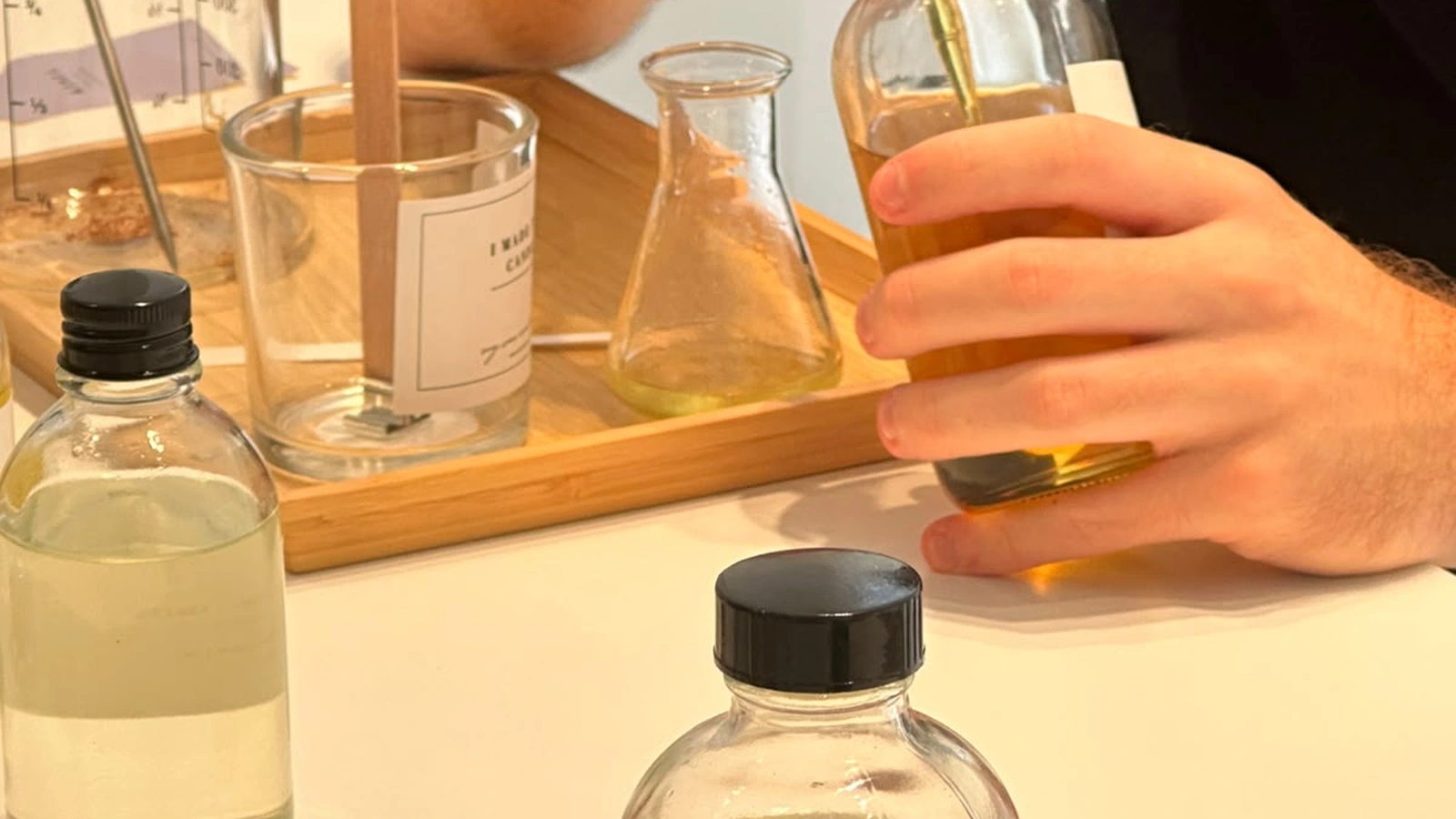
Fragrance blending is genuinely easier to learn by smelling and comparing multiple combinations directly, rather than through written guidance alone. Our fragrance workshop in Dubai gives participants the chance to test several scent pairings hands-on, with expert guidance on ratio and balance.
How Do You Test a Fragrance Blend Before Committing?
A structured testing process removes much of the guesswork from blending.
Smell Testing Before Pouring
Combining a few drops of each fragrance oil on a blotter strip or in a small dish lets you judge the blend’s balance before ever touching wax.
Small Test Pours
Once a blend smells promising, a small test pour — rather than a full batch — confirms how the combination performs across both cold throw and hot throw once poured and cured.
Adjusting Ratios Incrementally
If a test blend feels unbalanced, adjusting the ratio by small increments — rather than starting over completely — is usually the fastest way to refine it into something genuinely well-balanced.
What Are Common Mistakes When Blending Fragrances?
Even with a solid understanding of ratios and scent families, a few recurring mistakes catch out beginner blenders.
Blending Purely by Instinct Without Testing
Combining fragrances directly into a full wax batch based purely on how they smell from the bottle, without a blotter test or small pour first, is one of the most common and costly mistakes in fragrance blending.
Ignoring How Fragrances Change Once Heated
A blend that smells balanced cold can shift noticeably once heated, since individual fragrance notes evaporate and interact differently under heat — another reason a hot throw test matters as much as the initial cold smell test.
Overcomplicating a Blend Too Early
Beginners sometimes reach for four or five fragrance oils in pursuit of complexity, when a simpler two-to-three-oil blend, properly weighted, usually produces a more polished, intentional-feeling result.
How Do Professional Perfumers Approach Layering?
Looking briefly at principles borrowed from perfumery can sharpen a candle maker’s own approach to blending.
Thinking in Top, Middle, and Base Notes
Perfumery traditionally structures a scent around top notes (the first impression), middle notes (the heart of the scent), and base notes (the lingering foundation) — a framework that translates well to candle fragrance blending.
Building From the Base Upward
Many experienced blenders start by choosing a base note, since it forms the lasting foundation of the scent, then layer middle and top notes on top to add character and initial impact.
Applying This Framework to Candle-Specific Blending
While candles don’t evolve over hours the way a perfume does on skin, thinking in these layered terms still helps create a more considered, multidimensional fragrance rather than a single flat note.
Key Takeaways
- Layering fragrances adds depth and differentiation that a single fragrance oil often can’t achieve alone.
- Two to three fragrance oils is the practical sweet spot for most beginner and intermediate blends.
- Complementary scent families, such as woody and gourmand or citrus and floral, are generally more forgiving for beginners.
- Weighting a blend with one dominant note and smaller supporting notes produces more balanced results than equal parts.
- Testing with blotter strips and small pours before committing to a full batch avoids wasted wax and fragrance oil.
FAQs
1. How many fragrances should you combine?
Two to three fragrance oils is the practical sweet spot, offering complexity without becoming difficult to balance.
2. What scent families layer well?
Warm and woody notes tend to pair well with sweet or gourmand scents, while fresh citrus often complements floral or green notes.
3. How do you avoid overpowering blends?
Weighting the blend with one dominant note and smaller supporting notes, then testing before a full pour, helps avoid an overpowering result.
4. Can I combine more than three fragrances?
It’s possible but riskier, since each additional fragrance adds another variable that’s harder to balance against the others.
5. Should I test a blend before pouring a full batch?
Yes, testing with blotter strips and a small test pour lets you refine the ratio before committing significant wax and fragrance oil.
6. Do fragrance blends need to rest before judging them?
Yes, freshly combined oils can smell slightly different immediately after mixing than they do after a short rest period.
7. Is it better to start with equal parts of each fragrance?
Generally not — weighting one dominant note against smaller supporting notes tends to produce a more balanced, intentional result.
8. What’s a beginner-friendly fragrance pairing to start with?
A warm, woody base with a lighter sweet or gourmand note is a commonly recommended, forgiving starting combination.
9. How do I know if a blend is unbalanced?
If one note completely dominates or the combination smells muddy rather than layered, the ratio likely needs adjusting.
10. Can fragrance blending affect cold throw and hot throw differently?
Yes, since individual fragrance notes behave differently when heated, a blend’s cold throw and hot throw can differ and both are worth testing separately.
About Studio Kinza
Studio Kinza is Dubai and Abu Dhabi’s most reviewed candle-making experience — a fragrance house of hand-poured, 100% natural soy candles that began in a home kitchen and now hosts corporate workshops, private celebrations, and candle-making classes for groups of two to thirteen hundred at its International City, Warsan studio. Every candle-making experience is made with clean, natural fragrance, backed by 350+ five-star Google reviews and trusted by some of the world’s most respected brands.

Diwali Candle Gifts Dubai
Diwali Candle Gifts in Dubai: Thoughtful Ideas for Hosts, Friends...
Read More
Alternative Birthday Party Ideas For Teens Who Want Something Different
Alternative Birthday Party Ideas for Teens Who Want Something Different...
Read More
Teen Birthday Celebration In Dubai Make Your Own Scented Candle
Teen Birthday Celebration in Dubai: Make Your Own Scented Candle...
Read More