

Aesthetic Birthday Party Ideas for Teenage Girls in Dubai Aesthetic...
Read MoreFragrance for Candle Making: What Is Fragrance Load? A Simple Guide
Matching a gift to someone’s actual personality, rather than a generic popular choice, is what separates a genuinely well-received present from one that’s politely accepted and forgotten. Thinking through experience gifts Dubai shoppers can choose specifically by personality type offers a considerably more reliable framework than guessing based on age, occasion, or trend alone.
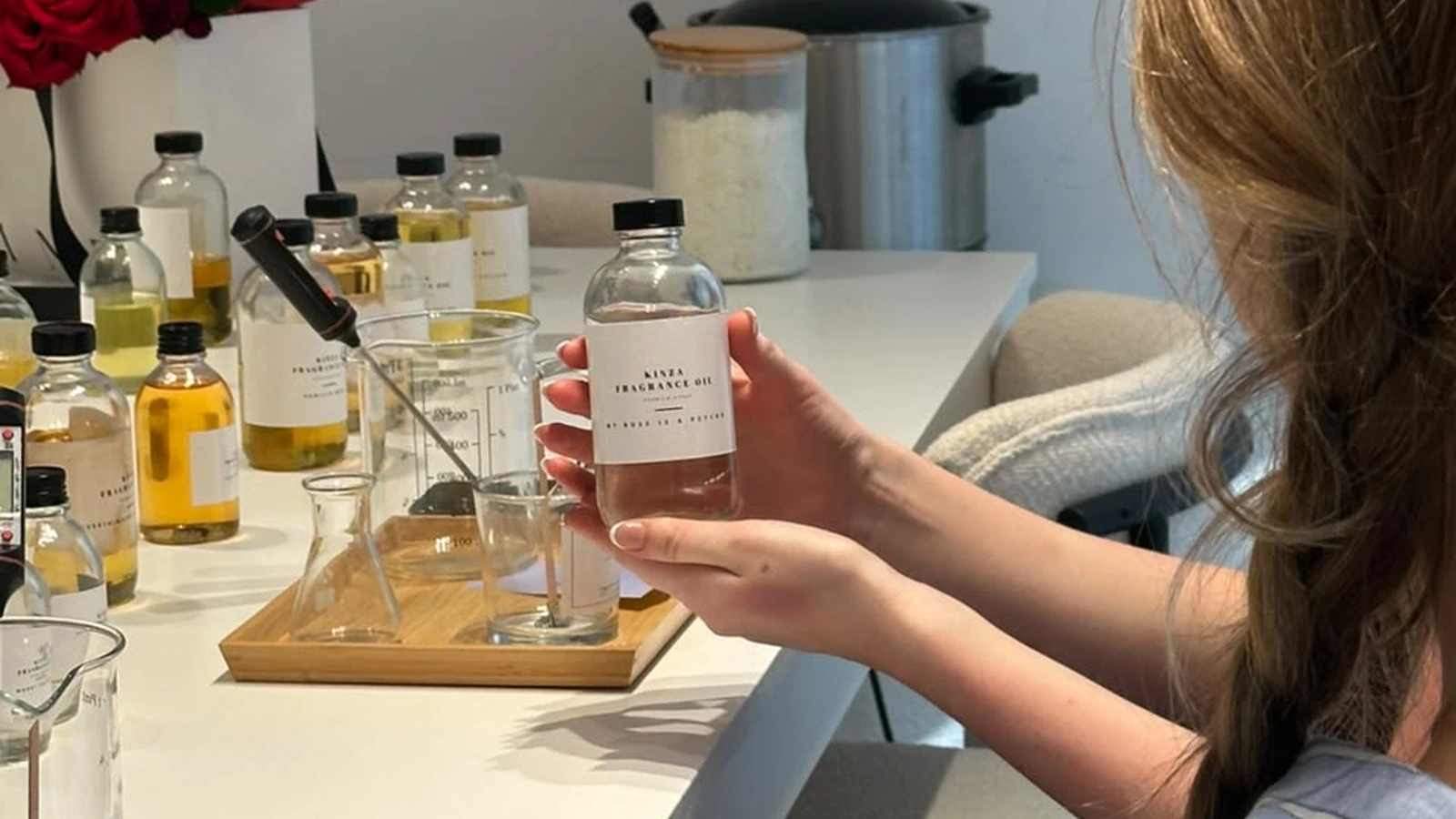
Anyone getting serious about fragrance for candle making eventually runs into the term “fragrance load,” usually in the context of a recipe calling for a specific percentage. It sounds technical, but the underlying concept is simple: fragrance load is the ratio of fragrance oil to wax in a candle recipe, and it’s one of the single biggest factors determining how strongly — and how safely — a finished candle smells.
Understanding fragrance oils for candles and learning how to choose fragrance for candle making helps explain why two candles using the same scent can smell completely different, and why “more fragrance” doesn’t always mean “better scent.” This guide breaks down what fragrance load actually means, how it’s calculated, and how to choose the right percentage for your project.
What Exactly Is Fragrance Load?
Before adjusting a recipe, it helps to understand precisely what the term describes.
A Simple Ratio, Not a Vague Concept
Fragrance load is expressed as a percentage — the weight of fragrance oil divided by the weight of wax, multiplied by one hundred. A 6% fragrance load in 100 grams of wax means 6 grams of fragrance oil.
It’s Measured by Weight, Not Volume
Fragrance load calculations use weight rather than volume, since fragrance oils and waxes have different densities, and measuring by volume alone can introduce meaningful inaccuracy.
Every Wax Type Has a Recommended Maximum
Each wax — soy, paraffin, coconut, or a blend — has a manufacturer-recommended maximum fragrance load, beyond which the wax may not hold the oil properly, leading to sweating, poor texture, or safety issues.
How Much Fragrance Oil Is Typically Used?
There’s a meaningful range depending on wax type and desired scent strength.
Common Ranges by Wax Type
Soy wax candles commonly use fragrance loads between 6% and 10%, while paraffin can often support slightly higher loads, depending on the specific wax and fragrance oil combination.
Starting Conservative and Adjusting
Many experienced candle makers start near the lower end of the recommended range and adjust upward gradually, testing scent throw at each stage rather than maximising fragrance from the first batch.
Why More Isn’t Automatically Stronger
Exceeding a wax’s recommended fragrance load doesn’t reliably produce a stronger scent — instead, it risks the oil separating from the wax, affecting texture, burn quality, and sometimes safety.
Does More Fragrance Mean Stronger Scent?
This is one of the most common misconceptions in candle making.
Diminishing Returns Beyond the Recommended Range
Once a wax reaches its fragrance-holding capacity, additional oil generally doesn’t translate into a proportionally stronger scent throw — the wax simply can’t bind any more fragrance effectively.
Scent Throw Depends on More Than Just Quantity
Wick size, wax type, and even room conditions all influence how strongly a candle’s scent is perceived, meaning fragrance load is only one variable among several.
Over-Fragrancing Can Actively Hurt Performance
Beyond a certain point, excess fragrance oil can cause a wet, greasy surface, poor adhesion to the vessel, or a compromised burn — working against the stronger scent it was meant to achieve.
How Does Fragrance Load Affect Cold and Hot Throw?
Fragrance load interacts directly with how scent is experienced both before and during burning.
Cold Throw and Fragrance Concentration
A candle’s unlit scent — its cold throw — is directly influenced by fragrance load, since a higher concentration of oil generally produces a stronger scent from an unlit candle.
Hot Throw Depends on More Than Load Alone
Hot throw, the scent released while burning, depends on fragrance load working correctly alongside wick size and wax type, meaning a high load with the wrong wick can still underperform.
Balancing Both Matters for a Well-Rounded Candle
The best-performing candles balance fragrance load with wick and wax choice so both cold and hot throw are genuinely strong, rather than optimising for one at the expense of the other.
Learn Fragrance Load Hands-On
Understanding fragrance load in theory is useful, but working with it directly accelerates the learning curve considerably. Our fragrance workshop walks participants through testing different fragrance loads first-hand, comparing scent throw across several percentages in a single guided session.
How Do You Calculate Fragrance Load for a Recipe?
Once the concept is clear, the calculation itself is genuinely straightforward.
The Basic Formula
Fragrance weight divided by total wax weight, multiplied by 100, gives the fragrance load percentage — for example, 8 grams of fragrance oil in 100 grams of wax equals an 8% load.
Adjusting for Batch Size
The same percentage applies regardless of batch size, so scaling a recipe up or down simply means recalculating the fragrance weight proportionally to the new wax quantity.
Recording Your Results for Consistency
Keeping a simple log of fragrance load, wax type, and resulting scent throw for each batch makes it far easier to replicate a successful recipe or troubleshoot a disappointing one.
Take the Guesswork Out of Fragrance Load
Rather than calculating and testing fragrance load alone, a guided candle-making experience at Studio Kinza uses pre-measured, professionally tested fragrance ratios, so every candle you pour leaves with a scent throw that’s already been calibrated correctly.
Are There Safety Considerations Tied to Fragrance Load?
Fragrance load isn’t purely a performance question — it also has genuine safety implications worth understanding.
Manufacturer Maximums Exist for a Reason
The maximum fragrance load a manufacturer recommends for a given wax isn’t an arbitrary marketing figure; it reflects testing around how much oil the wax can safely bind without compromising flash point or burn stability.
Flash Point and Fragrance Oil Selection
Fragrance oils have their own flash points, and combining a high load of a lower-flash-point oil can affect overall burn safety, which is why reputable B2B fragrance oil suppliers provide comprehensive flash point and IFRA safety data alongside their products.
Why Testing Matters More Than Following a Single Fixed Number
Because flash point and binding behaviour vary between specific fragrance oils, treating any single percentage as a universal rule — rather than testing your specific combination — risks both underwhelming performance and, in rarer cases, genuine safety issues.
How Does Fragrance Load Interact With Wax Type Specifically?
Different waxes hold fragrance differently, which is worth understanding in more depth beyond the basic ranges already covered.
Soy Wax’s Fragrance-Binding Characteristics
Soy wax generally binds fragrance oil well within its recommended range, but its lower melting point means excessive fragrance load can more easily lead to a wet, sweating surface compared to some other waxes.
Coconut and Blended Waxes
Coconut wax and soy-coconut blends often have slightly different fragrance-holding characteristics again, which is one reason candle makers switching wax types shouldn’t assume their previous fragrance load will transfer directly.
Why Wax Suppliers Provide Their Own Guidance
Because these differences are genuinely wax-specific, most wax suppliers publish their own recommended fragrance load ranges — a more reliable starting point than a generic rule of thumb pulled from a different wax entirely.
Key Takeaways
- Fragrance load is the percentage of fragrance oil relative to wax weight in a candle recipe, typically calculated by weight rather than volume.
- Soy wax commonly supports fragrance loads between 6% and 10%, though every wax has its own recommended maximum.
- Exceeding a wax’s fragrance-holding capacity doesn’t reliably produce a stronger scent and can compromise texture and burn quality.
- Fragrance load affects both cold throw and hot throw, but hot throw also depends on wick size and wax type.
- Calculating fragrance load is a simple formula — fragrance weight divided by wax weight, multiplied by 100.
FAQs
1. What is fragrance load?
Fragrance load is the percentage of fragrance oil relative to wax weight in a candle recipe, typically calculated by weight rather than volume.
2. How much fragrance oil is used?
Soy wax candles commonly use fragrance loads between 6% and 10%, though every wax type has its own manufacturer-recommended maximum.
3. Does more fragrance mean stronger scent?
Not necessarily — once a wax reaches its fragrance-holding capacity, extra oil doesn’t proportionally increase scent throw and can compromise burn quality.
4. Is fragrance load measured by weight or volume?
By weight, since fragrance oils and waxes have different densities and volume-based measurements can be inaccurate.
5. How does fragrance load affect cold throw?
A higher fragrance load generally produces a stronger cold throw, since it directly increases the concentration of scent in the unlit candle.
6. Does fragrance load alone determine hot throw?
No, hot throw also depends on wick size and wax type working correctly alongside the fragrance load.
7. What happens if I exceed the recommended fragrance load?
The wax may not hold the extra oil properly, potentially causing sweating, a greasy surface, or a compromised burn.
8. How do I calculate fragrance load for my own recipe?
Divide the fragrance oil weight by the total wax weight and multiply by 100 to get the percentage.
9. Does fragrance load need to change for different wax types?
Yes, each wax type — soy, paraffin, coconut, or a blend — has its own recommended fragrance load range.
10. Is it better to start with a high or low fragrance load when testing a new recipe?
Starting near the lower end of the recommended range and gradually testing upward gives a clearer, more controlled picture of scent throw.
About Studio Kinza
Studio Kinza is Dubai and Abu Dhabi’s most reviewed candle-making experience — a fragrance house of hand-poured, 100% natural soy candles that began in a home kitchen and now hosts corporate workshops, private celebrations, and candle-making classes for groups of two to thirteen hundred at its International City, Warsan studio. Every candle-making experience is made with clean, natural fragrance, backed by 350+ five-star Google reviews and trusted by some of the world’s most respected brands.

Indoor Birthday Party Ideas For Teens In Dubai
Indoor Birthday Party Ideas for Teens in Dubai Indoor birthday...
Read More
Why Candle Making Is The Perfect Birthday Activity For Teens
Why Candle Making Is the Perfect Birthday Activity for Teens...
Read More
Creative Teen Birthday Party Activities In Dubai
Creative Teen Birthday Party Activities in Dubai Creative teen birthday...
Read More