

Experience Gifts Dubai Shoppers Should Choose by Personality, Not Just...
Read MoreHow to Choose a Fragrance for Candle Making
Standing in front of dozens of fragrance oils with no real framework for choosing can turn what should be the most enjoyable part of a candle-making session into a slightly overwhelming one. Understanding a little about how fragrance for candle making actually works – scent families, blending logic, what suits a beginner – turns that overwhelm into genuine, confident choice.
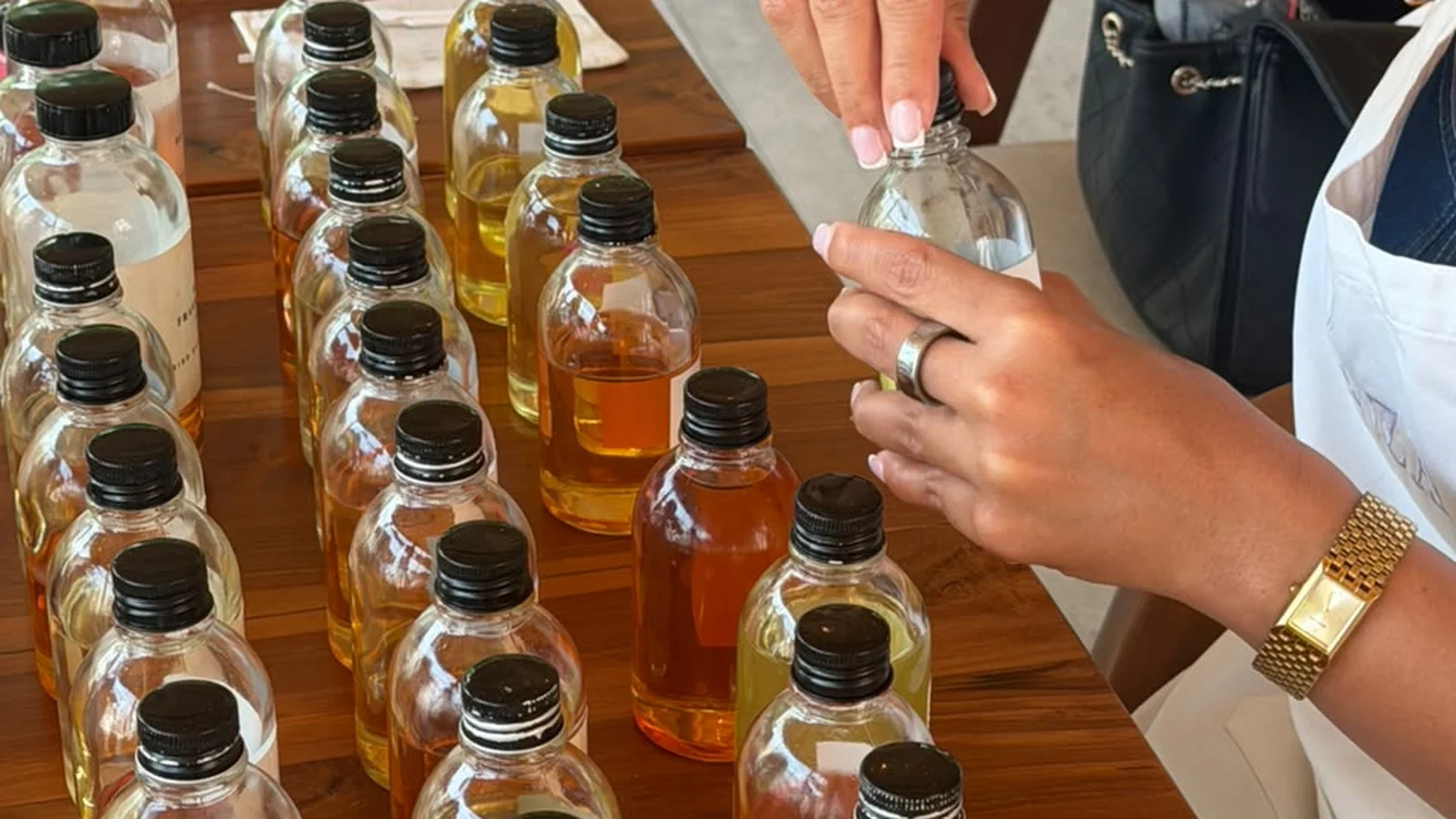
Start by choosing a fragrance family you enjoy, then test one or two complementary scents rather than combining too many at once. Floral, citrus, woody, gourmand and fresh fragrances offer different characteristics. If you’re making your own candle in a guided workshop, an instructor can help you assess combinations and create a balanced scent.
Candle Fragrance Selection at a Glance
What to Consider | Beginner Recommendation |
Fragrance family | Start with a family you already enjoy |
Number of scents | Begin with one or two |
Citrus | Fresh and bright |
Floral | Soft and aromatic |
Woody | Warm and grounding |
Gourmand | Sweet and comforting |
Fresh/Aquatic | Clean and airy |
Blending | Combine complementary profiles |
Testing | Smell and evaluate before finalising |
Instructor help | Ask for guidance if you’re unsure |
Understanding Scent Families
Fragrances are generally grouped into a handful of broad families and knowing them gives you a useful starting point before diving into specific individual scents.
Floral
Soft, romantic notes like rose, jasmine and lavender fall into this family, generally reading as classic, gentle and widely appealing.
Citrus
Bright, energising notes like bergamot, lemon and orange offer a fresh, uplifting quality, often used as a top note in more complex blends.
Woody
Sandalwood, cedar and vetiver bring warmth and depth, typically used as a base note to anchor a fragrance’s lasting character.
Gourmand
Vanilla, caramel and similar dessert-like notes offer a comforting, indulgent quality, popular for cosier, homier fragrance profiles.
Fresh and Aquatic
Clean, marine-inspired notes evoke a crisp, airy quality, often chosen for bathroom or kitchen-destined candles specifically.
How Many Scents Should I Combine?
One of the most common beginner questions and the answer depends partly on confidence level and partly on what you’re going for.
Starting Simple: One or Two Notes
For a genuinely foolproof result, combining just one or two complementary notes tends to produce a clean, well-balanced fragrance without much risk of the blend feeling muddled.
Building Complexity: Three or More Notes
More experienced or adventurous guests sometimes blend three or more notes to build a fuller, more layered fragrance profile, though this requires a slightly better sense of how different notes interact.
When in Doubt, Simplify
If you’re genuinely unsure, erring toward fewer notes is the safer choice – it’s far easier to identify why a two-note blend isn’t working than to untangle a five-note combination that’s gone slightly wrong.
Which Scents Blend Well?
Certain combinations tend to work reliably, giving you a useful starting point if you’re not sure where to begin.
Complementary Pairings
Citrus and floral notes often pair well, since the bright citrus lifts the softer floral base without overwhelming it.
Contrasting Pairings
Woody and floral combinations can work beautifully together, with the warmth of the wood grounding the lighter floral notes.
Notes That Can Clash
Very strong, dominant notes – particularly certain gourmand or heavily spiced scents – can be difficult to balance with an equally strong second note, so pairing a bold note with something more subtle tends to work better than combining two bold notes together.
Should Beginners Use One Scent?
For a genuinely first attempt, there’s a real case for keeping things simple.
The Case for Simplicity
A single, well-chosen fragrance removes any risk of an unbalanced blend, letting you focus entirely on the pouring technique itself during your first session.
The Case for Trying a Blend
Equally, a guided session with instructor support removes much of the risk from blending even as a beginner, since you’re not figuring out combinations entirely on your own.
Following Instructor Guidance
Ultimately, most guided sessions are built to support beginners through blending safely, so leaning on your instructor’s suggestions is often the best approach regardless of your starting confidence level.
Understanding Top, Heart and Base Notes
Beyond broad scent families, understanding how a fragrance actually unfolds over time adds another useful layer to your choice.
Top Notes: The First Impression
Light, fast-evaporating notes like citrus and light florals form the first few minutes of a fragrance’s impression, fading relatively quickly once a candle is burning.
Heart Notes: The True Character
Emerging as the top notes fade, heart notes – often floral, spiced, or green – form what most people actually recognise as a fragrance’s defining character.
Base Notes: The Lasting Depth
Woods, musks and ambers make up the base, emerging last and lingering longest, anchoring the overall composition and giving it staying power.
Why This Structure Matters for Beginners
Understanding this three-part structure helps explain why a fragrance can smell different when first blended versus once burning – a useful thing to know so you’re not surprised if the scent evolves slightly over the course of your session.
Common Beginner Mistakes to Avoid
A few recurring missteps are easy to avoid once you know to watch for them.
Choosing Based on the Bottle Alone
Testing a fragrance oil straight from the bottle can smell notably different from how it performs once blended and burning, so trusting your instructor’s guidance on how a raw scent will translate matters more than the initial sniff test.
Overloading With Too Many Notes at Once
New candle makers sometimes get excited and want to include every scent they like in one blend, which usually produces a muddled, unclear fragrance rather than a more interesting one.
Ignoring Personal Associations
A technically “well-balanced” fragrance that happens to remind you of something unpleasant will never feel right, regardless of how expertly it’s built – trusting your own gut reaction matters as much as following blending theory.
Matching Fragrance to Purpose
Beyond personal preference, thinking about where and how the candle will be used can help guide your choice.
Choosing for a Specific Room
Different fragrances suit different spaces – lighter, fresher scents for a kitchen or bathroom, warmer notes for a living room or bedroom.
Choosing for a Gift
If you’re making the candle as a gift, leaning toward more universally appealing, softer scents tends to be a safer choice than something bold or particularly polarising.
Choosing for the Season
Fresh, citrus and floral notes tend to suit warmer months, while richer, warmer notes like amber and spice come into their own during cooler seasons.
Trusting the Process Over Perfection
For genuine beginners, it’s worth remembering that fragrance blending is meant to be enjoyable, not a test with a single correct answer.
There’s No Universally “Correct” Blend
Unlike a technical skill with an objectively right or wrong outcome, fragrance is entirely a matter of personal taste – the goal is a scent you genuinely enjoy, not one that matches some external standard.
Instructors Are There to Guide, Not Judge
Guided sessions exist specifically to make this process approachable, so leaning on your instructor’s expertise, especially for your first attempt, takes the pressure off getting it “right” on your own.
Book a Guided Fragrance Blending Session
Explore our full fragrance library and get expert guidance on building your own signature scent. Visit Fragrance Workshop Dubai or our Candle Making Experience to book your session.
Key Takeaways
- Fragrances generally fall into families – floral, citrus, woody, gourmand and fresh/aquatic.
- Beginners often do best starting with one or two complementary notes rather than a complex blend.
- Citrus and floral, or woody and floral, tend to be reliable, well-balancing combinations.
- Instructor guidance during a guided session reduces the risk of blending as a first-timer.
- Matching fragrance to the candle’s intended room, purpose, or season helps narrow down your choice.
FAQs
1. How many scents should I combine when making a candle?
Starting with one or two complementary notes is the safest approach for beginners, though more experienced guests sometimes blend three or more.
2. Which scents blend well together?
Citrus and floral, or woody and floral, are reliable combinations, since one note tends to lift or ground the other effectively.
3. Should beginners use just one scent?
It’s a reasonable, foolproof choice, though guided sessions make blending safe even for first-timers with instructor support.
4. What are the main fragrance families for candles?
Floral, citrus, woody, gourmand and fresh/aquatic are the broad categories most candle fragrances fall into.
5. How do I choose a fragrance for a candle I’m gifting?
Softer, more universally appealing scents tend to be a safer choice for gifts than bold or polarising fragrances.
6. Can certain fragrance combinations clash?
Yes, pairing two very strong or dominant notes together can be difficult to balance, so combining a bold note with something more subtle tends to work better.
7. Does the season affect which fragrance I should choose?
Many people prefer fresh, citrus and floral notes in warmer months and richer, warmer notes like amber and spice in cooler months.
8. Should I choose a fragrance based on the room the candle will go in?
It can help – lighter, fresher scents often suit kitchens and bathrooms, while warmer notes suit living rooms and bedrooms.
9. What if I don’t like my fragrance blend once it’s made?
In a guided session, instructors can help you adjust the blend before the final pour if something isn’t working as expected.
10. Is there a wrong way to choose a fragrance?
Not really – fragrance preference is genuinely subjective, so the “right” choice is ultimately whichever blend you personally enjoy most.
11. Why does my fragrance oil smell different once blended than it did from the bottle?
A raw fragrance oil can smell noticeably different once blended with wax and burning, since heat releases the scent differently than simply smelling it straight from the bottle – trusting instructor guidance on this helps set realistic expectations.
12. What’s the difference between top, heart and base notes?
Top notes form the first, fastest-fading impression; heart notes define the fragrance’s core character; base notes anchor the composition and determine how long it lingers.
About Studio Kinza
Studio Kinza is Dubai and Abu Dhabi’s most reviewed candle-making experience – a fragrance house of hand-poured, 100% natural soy candles that began in a home kitchen and now hosts corporate workshops, private celebrations and candle-making classes for groups of two to thirteen hundred. Every candle-making experience is made with clean, natural fragrance, backed by 350+ five-star Google reviews and trusted by some of the world’s most respected brands.

Experience Gifts That Say Thank You Properly
Experience Gifts That Say Thank You Properly A genuine thank-you...
Read More
Candle Gifts Dubai Residents Choose for a New Home
Candle Gifts Dubai Residents Choose for a New Home Moving...
Read More
Corporate Gifts for Colleagues: Creative Experience Ideas That Land Well
Corporate Gifts for Colleagues: Creative Experience Ideas That Land Well...
Read More