
How to Plan a Diwali Candle-Making Get-Together at Home in...
Read MoreComplete Guide to Planning a Private Event in Dubai
Planning a private event in Dubai comes with genuine advantages — a huge range of venues, experienced vendors, and no shortage of interactive entertainment options — but also enough choice that it’s easy to feel overwhelmed before you’ve even settled on a date. This guide walks through the full planning process for private event planning Dubai hosts need, from initial timeline through to the interactive elements that tend to make an event genuinely memorable rather than merely well-organised.
Event Planning Timeline
Getting the sequencing right from the start makes everything downstream considerably easier.
8+ Weeks Out: Foundational Decisions
Begin with the big-picture decisions — guest count, overall budget, and general date range — since these determine which venues and vendors are even realistically available to you.
6–8 Weeks Out: Venue and Key Vendor Booking
Once your foundational decisions are locked in, secure your venue and any high-demand vendors (catering, entertainment, photography) that tend to book out furthest in advance.
3–4 Weeks Out: Finalising Details
With the major bookings confirmed, this window is for finalising specifics — menu selections, entertainment logistics, décor details, and any personalisation for interactive elements.
1–2 Weeks Out: Confirming Numbers and Logistics
Final guest counts, vendor confirmations, and a detailed run sheet for the day itself should all be locked in during this final stretch.
Event Week: Last-Minute Coordination
The final days are for confirming delivery times, checking in with your key vendors, and preparing yourself to actually enjoy the event rather than managing logistics on the day itself.
Budget
A clear, realistic budget from the outset prevents both overspending and the frustration of cutting corners on details that matter most.
Allocating Spend Where It Counts
Rather than spreading budget evenly across every element, concentrating spend on the moments guests will remember most — a standout interactive activation, quality catering, considered entertainment — tends to deliver stronger perceived value than an evenly distributed, unremarkable budget.
Building in a Contingency
Reserving a portion of your budget, typically around ten percent, for unexpected costs or last-minute adjustments protects the event from small surprises derailing your planning.
Common Costs First-Time Hosts Overlook
Delivery and setup fees, service charges, and vendor overtime for events running longer than planned are all worth budgeting for explicitly rather than discovering them as surprises on a final invoice.
Venue Selection
The venue sets the tone for everything else about the event, making it one of the most consequential early decisions.
Matching Venue to Event Type
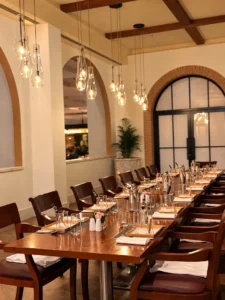
A milestone birthday, a corporate gathering, and an intimate family celebration each call for genuinely different venue types — from grand event spaces to more intimate private dining rooms or home settings.
Practical Logistics Beyond Aesthetics
Parking, accessibility, and proximity to major areas of the city all affect guest turnout and comfort just as much as how a venue photographs.
Seasonal Considerations
Outdoor venues work beautifully during Dubai’s cooler months (November through March), while summer events are almost always better suited to indoor, climate-controlled spaces regardless of how striking an outdoor option might look.
Interactive Experiences
Increasingly, the events that get talked about afterward are the ones that gave guests something to actually do, not just observe.
Why Interactive Elements Matter
A purely passive event — dinner, speeches, standard entertainment — rarely leaves guests with a specific, personal memory of the occasion. An interactive element gives every guest a genuine, individual moment within the broader event.
Live Candle Bar Activations
A live candle bar for private events has become one of Dubai’s most popular private event additions, combining sensory appeal with a genuine keepsake guests take home – effectively replacing both a favour and an entertainment element in a single booking.
Guided Workshop Stations
For events with more time built into the schedule, private candle-making workshops – rather than a shorter activation – give guests a more immersive creative experience alongside the rest of the celebration.
Positioning Interactive Elements Within Your Timeline
Cocktail hour and early reception periods tend to work best for interactive stations, giving guests something engaging to do while the room fills, rather than standing around with a drink and no clear activity.
Designing a Guest Experience, Not Just a Schedule
Beyond logistics, it’s worth thinking deliberately about how guests will actually experience the flow of your event.
Considering the Full Guest Journey
From arrival through to departure, mapping out what guests encounter at each stage — a welcome moment, a highlight activity, a natural close to the evening — tends to produce a more cohesive event than simply listing a sequence of logistics.
Avoiding Dead Time
Stretches where guests have nothing to do or focus on, particularly during transitions between parts of the event, are where energy most often dips. Interactive elements or simply a well-planned entertainment schedule help avoid these lulls.
Personal Touches at Scale
Even at larger events, small personalised details — a name card, a specific song request, a scent choice reflected in an interactive station — help guests feel individually considered within a bigger celebration.
Coordinating Multiple Vendors Smoothly
Larger private events often involve several vendors working in parallel, and a few practices help keep everything running smoothly on the day.
Appointing a Single Point of Contact
Whether that’s yourself, a hired planner, or a designated friend or family member, having one person coordinating across all vendors reduces the risk of miscommunication on timing, guest counts, or last-minute changes.
Sharing a Detailed Run Sheet
Providing every vendor with a shared timeline — setup windows, key moments, breakdown times — helps everyone work from the same information rather than relying on verbal coordination on the day.
Building in Buffer Time
Whether for vendor setup, guest arrival, or transitions between parts of the event, a little built-in buffer prevents a tight schedule from feeling rushed if anything runs even slightly behind.
Bring an Interactive Element to Your Event
A live candle bar gives your private event a genuinely memorable, interactive centrepiece and a keepsake every guest takes home. Explore Private Workshops to start planning your event, and get in touch early enough to secure your preferred date and any custom personalisation.
Common Private Event Planning Mistakes to Avoid
A few recurring mistakes tend to undermine otherwise well-planned private events, and they’re worth naming directly.
Underestimating Setup and Breakdown Time
New hosts frequently plan a schedule based only on the event’s core hours, forgetting to account for vendor setup beforehand and breakdown afterward — both of which can affect venue access windows and overall costs if not planned for explicitly.
Overpacking the Programme
Trying to fit too many entertainment elements or activities into a single event can leave the evening feeling rushed rather than enjoyable. Choosing one or two genuinely strong elements — like a single well-executed interactive station — tends to outperform a crowded, unfocused programme.
Not Confirming Dietary and Accessibility Needs Early
Collecting dietary requirements and any accessibility needs from your guest list well ahead of the event avoids last-minute scrambling and ensures every guest feels genuinely considered.
Skipping a Final Walkthrough
For larger or more complex events, a final walkthrough with your venue and key vendors in the days before the event helps catch any misalignment on timing or setup before it becomes a problem on the day itself.
Key Takeaways
- Starting your planning timeline eight or more weeks out gives you access to the widest range of venues and vendors.
- Concentrating budget on memorable moments delivers stronger value than spreading spend evenly.
- Venue choice should balance aesthetics with practical logistics like parking and accessibility.
- Interactive elements, like a live candle bar, give guests genuine individual moments within a larger event.
- A single point of contact and a shared run sheet help coordinate multiple vendors smoothly on the day.
FAQs
How far in advance should I start planning a private event in Dubai?
Beginning eight or more weeks ahead is generally advisable, particularly for larger events requiring popular venues or vendors.
How should I allocate my event budget?
Concentrating spend on the moments guests will remember most — entertainment, catering, a standout interactive element — tends to deliver more perceived value than spreading budget evenly.
What time of year is best for an outdoor private event in Dubai?
November through March offers the most comfortable weather for outdoor venues, while summer events are better suited indoors.
What is a live candle bar, and why is it popular for private events?
It’s a staffed, interactive station where guests pour and personalise their own candle, combining entertainment with a genuine keepsake in one booking.
How much contingency budget should I set aside?
Around ten percent of your total budget is a reasonable buffer for unexpected costs or last-minute adjustments.
What’s the best way to coordinate multiple vendors for a large event?
Appointing a single point of contact and sharing a detailed run sheet with all vendors helps prevent miscommunication on the day.
Where should an interactive station be placed within the event timeline?
Cocktail hour or the early reception period tends to work best, giving guests something to do while the room fills.
What costs do first-time event hosts commonly overlook?
Delivery and setup fees, service charges, and potential vendor overtime are all worth budgeting for explicitly.
Should I hire a professional event planner, or can I plan a private event myself?
This depends on the event’s scale and complexity — larger, more logistically complex events often benefit from professional coordination, while smaller gatherings are often manageable independently with a clear timeline.
How can I make a private event feel more memorable than a standard dinner or party?
Adding a genuine interactive element, like a live candle bar or guided workshop, gives guests something to actively participate in, which tends to be remembered far longer than passive entertainment alone.
What’s a common mistake first-time private event hosts make?
Underestimating setup and breakdown time when planning the schedule is one of the most frequent oversights, which can affect venue access and overall costs if not accounted for early.
Should I do a final walkthrough before a large private event?
Yes, a walkthrough with your venue and key vendors in the days beforehand helps catch any misalignment on timing or setup before it becomes an issue on the day itself.
About Studio Kinza
Studio Kinza is Dubai and Abu Dhabi’s most reviewed candle-making experience — a fragrance house of hand-poured, 100% natural soy candles that began in a home kitchen and now hosts corporate workshops, private celebrations, and candle-making classes for groups of two to thirteen hundred. Every candle-making experience is made with clean, natural fragrance, backed by 350+ five-star Google reviews and trusted by some of the world’s most respected brands.

Diwali Candle Gifts Dubai
Diwali Candle Gifts in Dubai: Thoughtful Ideas for Hosts, Friends...
Read More
Alternative Birthday Party Ideas For Teens Who Want Something Different
Alternative Birthday Party Ideas for Teens Who Want Something Different...
Read More
Teen Birthday Celebration In Dubai Make Your Own Scented Candle
Teen Birthday Celebration in Dubai: Make Your Own Scented Candle...
Read More