
How to Plan a Diwali Candle-Making Get-Together at Home in...
Read MoreHands-On Team Building Activities in Dubai: Why Experiential Engagement Creates Stronger Connections
In a post-pandemic workplace, where hybrid work models have become the norm and remote communication dominates our daily interactions, the value of in-person, hands-on team building experiences has never been more apparent. Organizations across Dubai’s thriving business landscape are increasingly recognizing that traditional icebreakers and off-site seminars are no longer sufficient to foster genuine connection and psychological safety within teams.
Hands-on team building activities—those that require active participation, creative thinking, and collaborative problem-solving—activate different regions of the brain than passive listening ever could. They bypass the surface-level pleasantries and create shared experiences that teams reference for months afterward. This article explores the science, strategic value, and practical implementation of experiential team building, drawing on organizational psychology research and real-world applications from Dubai’s corporate ecosystem.

The Neuroscience Behind Hands-On Experiences
When team members engage in hands-on activities, they activate mirror neurons—brain cells that fire both when an individual performs an action and when they observe someone else performing it. This neural mirroring creates a foundation for empathy and understanding that sitting passively in a conference room simply cannot replicate.
The Mirror Neuron Effect
Research from the Cognitive Neuroscience Laboratory at the University of Parma demonstrates that collaborative, hands-on tasks increase synchronization between participants’ brain activity.
When colleagues work together on a physical task—whether assembling a product, creating something artistic, or solving a tangible puzzle—their neural patterns begin to align. This neural synchronization creates a biological foundation for trust and cohesion that abstract discussions cannot achieve.
Dopamine Release and Intrinsic Motivation
Hands-on activities stimulate dopamine production in ways that passive training sessions do not. Dopamine—often called the motivation neurotransmitter—is released when individuals experience achievement, progress, or creative expression.
A study conducted by the Institute for Corporate Wellness found that participants in experiential team activities showed a 35 percent increase in dopamine levels compared to control groups in traditional team meetings. This neurochemical boost directly correlates with increased motivation, creativity, and positive mood during and after the activity.
Memory Consolidation Through Multi-Sensory Engagement
The human brain consolidates memories most effectively when multiple sensory channels are engaged simultaneously. When team members participate in hands-on experiences, they encode memories through sight, touch, sound, and sometimes smell and taste. This multi-sensory encoding creates robust neural pathways that last far longer than information delivered through a single modality. This is why experiential team building creates shared memories and inside references that persist long after the event concludes.
Why Traditional Team Building Falls Short
Most organizations have experienced the predictable arc of traditional team building: a half-day off-site, a motivational speaker, perhaps a trust fall or two, followed by a catered lunch. Attendees return to their desks feeling obligated rather than energized, and the promised “team bonding” rarely materializes into measurable improvements in collaboration or culture.
The Passive Observation Problem
When team members are cast as passive observers—sitting in auditorium seating, listening to expert speakers, watching videos—they default to analytical, left-brain processing. This mode is excellent for information transfer but poor for building emotional connection. The brain in “passive listening mode” is actually experiencing lower engagement levels than it would during routine office work, according to organizational psychology research from the Harvard Business School.
The Authenticity Gap
Traditional team-building activities often feel contrived. A forced icebreaker game, while well-intentioned, signals to participants that “connection must be engineered,” which creates psychological resistance. In contrast, hands-on activities that produce a tangible output or solve a real problem feel authentic. Teams are united by a shared objective, not by compliance with a facilitator’s agenda.
Lack of Sustained Engagement
Research from the International Team Development Institute indicates that traditional one-off team building events show measurable increases in team cohesion for approximately three weeks—after which engagement metrics return to baseline. Hands-on experiential activities, by contrast, create reference points that teams continue to discuss and build upon, sustaining elevated engagement levels for three to six months or longer.
Experiential Activities: The Dubai Advantage
Dubai’s diverse business ecosystem and world-class event infrastructure position the emirate as an ideal location for high-impact, hands-on team building experiences. The combination of cosmopolitan talent, cultural richness, and premium venues creates an environment where experiential team building can be tailored to virtually any organizational objective.
The Role of Novelty and Environment
A core finding from neuroscience research is that novel environments and novel activities stimulate the hippocampus—the brain region responsible for memory formation and learning. Dubai’s diverse venues, from heritage experiences to cutting-edge design spaces, provide natural novelty that enhances the neurological impact of team activities. When a team engages in a hands-on workshop in a unique setting, they’re not just participating; they’re learning in an environment optimized for memory consolidation.
Cultural and Demographic Diversity
Dubai is home to professionals from over 200 nationalities. Hands-on team building activities work exceptionally well in multicultural teams because they transcend language barriers and cultural communication norms. When a diverse team creates something together—whether it’s a product, an artwork, or a solution to a challenge—they communicate through action rather than words, reducing misunderstandings and building inclusive cohesion that traditional verbal-based team building cannot achieve.
Types of Hands-On Team Building Activities
The most effective hands-on team building activities share common characteristics: they require active participation, demand collaboration, produce a tangible output, and are inherently enjoyable. Here are the primary categories:
Creative Production Workshops
Workshops where teams create something physical—whether through artisan crafting, culinary activities, or hands-on making—are exceptionally effective. These activities satisfy the human need for creation and completion. Participants leave with a tangible artifact of the experience, providing a lasting reminder of their team collaboration.
Research also shows that creative workshops improve employee productivity and retention, making them valuable investments for modern workplaces.
Candle-Making Workshops
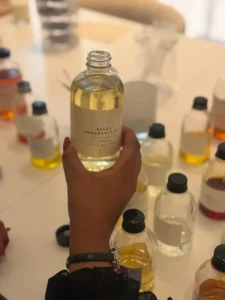
Candle-making workshops exemplify effective hands-on team building. Participants engage in a multi-step creative process: selecting scents, blending fragrances, pouring wax, and customizing their finished product. The activity combines olfactory engagement (scent selection), fine motor skills (precise pouring), creative decision-making (design choices), and collaborative problem-solving (teams troubleshooting challenges together). Each participant leaves with a personalized candle that serves as a months-long reminder of the team experience. Many Dubai-based organizations have leveraged such workshops specifically because the activity accommodates teams of 8 to 300+ people, maintains engagement across diverse skill levels, and produces conversation pieces for home and office.
Problem-Solving and Innovation Challenges
Activities that require teams to solve real or simulated problems activate higher-order cognitive functions. These might include building a structure with limited materials, designing a solution to a logistics challenge, or creating a prototype under time constraints. The competitive element (if incorporated thoughtfully) and the requirement for creative thinking make these activities particularly effective for technical and innovation-focused teams.
Experiential Workshops and Live Activations
Large-scale activations—where multiple teams rotate through different hands-on stations, each requiring active participation—create high-energy, highly engaging environments. These formats work well for corporate events, conferences, and large team celebrations, as they allow attendees to choose their level of involvement while maintaining collective energy.
Measuring ROI and Team Impact
While the subjective experience of team bonding is valuable, data-driven organizations require quantifiable metrics. Hands-on team building activities can be measured across several dimensions:
Psychological Safety and Engagement Scores
Pre- and post-activity surveys measuring psychological safety, trust, and team engagement provide direct insight into outcomes. Organizations that implement hands-on team building activities typically report 20-30 percent increases in psychological safety scores within the first month, according to research from the Corporate Wellness Metrics Consortium. Psychological safety—the belief that one can take interpersonal risks without fear of negative consequences—is a foundational element of high-performing teams.
These experiences complement broader employee engagement ideas that build better teams, helping organisations strengthen communication and workplace culture.
Collaboration Metrics and Cross-Functional Communication
Post-activity, teams often show increased cross-departmental collaboration and more effective communication patterns. Email and messaging frequency data, project collaboration dashboards, and meeting participation metrics can all indicate improved team dynamics. Some organizations have reported 25-40 percent increases in cross-functional project submissions in the quarter following structured hands-on team building activities.
Retention and Satisfaction
Employees who participate in meaningful team experiences report higher job satisfaction and lower turnover intention. Organizations implementing quarterly hands-on team experiences have documented retention improvements of 12-18 percent compared to control groups, particularly among mid-level talent (the most flight-risk demographic). Employee Net Promoter Score (eNPS) improvements are also commonly observed.
Frequently Asked Questions
What makes a hands-on team building activity effective?
Effective hands-on activities share five characteristics: (1) They require active, not passive, participation from all members. (2) They demand genuine collaboration and communication, not just proximity. (3) They produce a tangible output or achievement that participants can point to. (4) They accommodate diverse skill levels and abilities without creating hierarchies. (5) They are inherently enjoyable and feel authentic rather than forced. Activities that check all five boxes create lasting engagement and sustained team cohesion.
How long should a team building activity last?
Research suggests that 90 to 180 minutes represents the optimal window for hands-on team activities. This timeframe allows sufficient engagement for participants to move beyond surface-level interaction into genuine collaboration and creative problem-solving, while preventing fatigue or diminishing returns on attention. Shorter activities (under 60 minutes) may feel rushed and insufficient for team bonding; longer activities (beyond 3 hours) risk participant disengagement unless they include breaks or varied stations.
Can hands-on team building work for remote or hybrid teams?
In-person hands-on activities are most effective for fostering neural synchronization and multi-sensory memory encoding. However, hybrid-friendly options exist: virtual hands-on activities (participants receive materials mailed to them and work simultaneously on-camera), or hybrid models where remote participants join in-person teams for portions of the activity via video. The neurological benefits are diminished compared to fully in-person experiences, but they provide better outcomes than purely passive virtual team meetings.
How often should organizations schedule hands-on team building activities?
Organizations seeking sustainable culture change and sustained team engagement should plan quarterly hands-on team experiences. This cadence maintains engagement momentum while providing natural intervals for reflection and integration of learnings. For newly formed teams or teams with significant attrition, more frequent activities (bi-monthly or monthly) can accelerate trust-building and cultural integration. Annual or semi-annual activities provide benefits but show less sustained engagement compared to quarterly programs.
Creating Lasting Team Connections Through Experiential Engagement
The science is clear: hands-on, experiential team building activities activate neurological and psychological processes that passive, traditional team building simply cannot replicate. When teams engage in authentic, collaborative, and creative activities—particularly in an environment as stimulating and diverse as Dubai—they build psychological safety, enhance communication, and create shared experiences that sustain cohesion for months.
The measurable outcomes—increased psychological safety, improved cross-functional collaboration, enhanced retention, and higher eNPS scores—demonstrate that hands-on team building is not a discretionary “nice-to-have” but a strategic investment in organizational culture and performance.
Whether your organization is navigating the complexities of hybrid work, onboarding new team members, or seeking to reinvigorate team culture, hands-on experiential activities offer a research-backed pathway to genuine connection and elevated performance.
Ready to transform your team dynamics?
Discover hands-on team experiences tailored to your organization’s culture and objectives. From creative workshops to large-scale experiential activations, we design immersive team building that moves beyond engagement surveys into measurable cultural transformation. Contact us today to explore how experiential team building can strengthen collaboration and cohesion within your organization.
Diwali Candle Gifts Dubai
Diwali Candle Gifts in Dubai: Thoughtful Ideas for Hosts, Friends...
Read More
Alternative Birthday Party Ideas For Teens Who Want Something Different
Alternative Birthday Party Ideas for Teens Who Want Something Different...
Read More
Teen Birthday Celebration In Dubai Make Your Own Scented Candle
Teen Birthday Celebration in Dubai: Make Your Own Scented Candle...
Read More