

Why Does Candle Wax Shrink as It Cools? The Science...
Read MoreWhy Does a Candle Produce Black Soot? The Chemistry of Incomplete Combustion
Why does this happen? The answer becomes clearer when we examine what happens to materials and energy rather than relying on how a candle looks at first glance. Everyday candle observations provide a surprisingly accessible introduction to physics and chemistry, but a familiar appearance can have more than one cause.
This Studio Kinza guide explores why candles produce black soot for curious readers, students and hobby makers. It follows the mechanisms involved, explains which conclusions are reasonable, and separates useful observations from claims that would require controlled measurement. The aim is understanding rather than a shopping guide or a universal recipe.
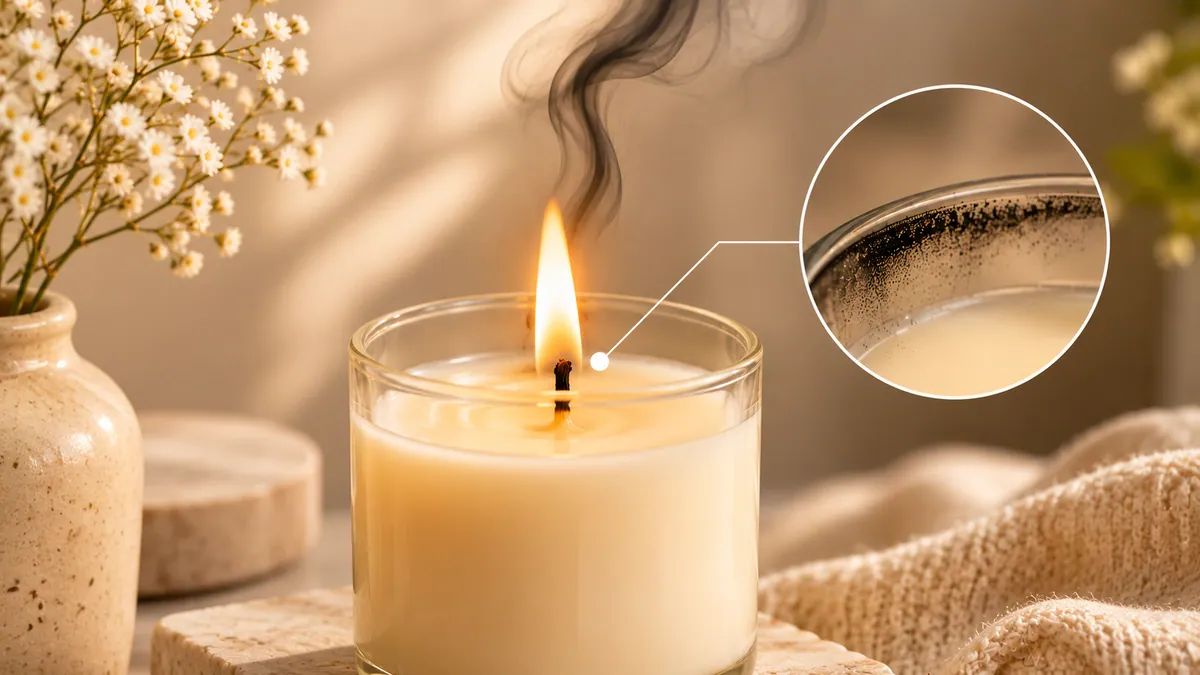
What is soot?
Soot consists mainly of very small carbon-rich particles formed during incomplete combustion. Candle flames can produce these particles when fuel-rich regions do not receive enough oxygen or when oxidation is incomplete before particles leave the hot zone.
To understand this point, pay attention to the sequence of events rather than only the final result. Ask what changes first, what must be present for the process to continue, and which surrounding conditions could alter what you see. In the context of why candles produce black soot, that approach is more reliable than attributing every difference to one ingredient or one moment of observation. It also helps distinguish a plausible explanation from something that has actually been measured.
Why fuel vapour matters
Wax first melts and vaporises near the wick. The vapour then reacts with oxygen. In some fuel-rich parts of the flame, molecules break apart and can form precursors to soot. Particle growth and oxidation compete as gases move through the flame.
Incomplete combustion explained
Complete combustion is an idealised process in which carbon is converted largely to carbon dioxide and hydrogen to water. Real flames contain gradients in oxygen, temperature and mixing. Incomplete combustion can produce carbon monoxide, unburned compounds and soot.
The yellow glow and soot
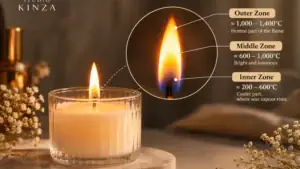
Many candle flames appear yellow because tiny soot particles become hot enough to glow. Examining candle flame temperature zones illustrates how some of these glowing particles burn away cleanly as they pass through oxygen-rich outer regions. Visible yellow light does not by itself establish how much soot escapes into the room.
Why a draft can increase smoke
Air currents can disturb the flame and change mixing. Understanding why a candle flame flickers without wind highlights how even subtle indoor air circulation can cool or stretch parts of the reaction zone, allowing more unburned carbon particles to escape. The result depends on the direction and intensity of the airflow, not merely the presence of fresh air.
Wick condition and fuel delivery
A long or carbonised wick can affect the rate and location of fuel delivery. Exploring how candle wicks draw liquid wax clarifies how capillary forces supply fuel; if the flame receives more vapour than can burn efficiently under the local conditions, smoking may increase. Wick and wax formulation should be considered together rather than in isolation.
Black marks on containers
Dark deposits on a vessel can be soot that condensed or adhered to cooler surfaces. Their appearance is evidence of deposition, but the exact quantity emitted cannot be determined from a photograph of the glass. Other residues may also contribute to marks.
Soot is not the same as fragrance
A candle’s fragrance comes from volatile aromatic compounds, while soot is particulate material associated with combustion. A strong smell does not automatically mean high soot emissions. Conversely, a low-fragrance candle can smoke if combustion conditions are poor.
A careful observation checklist
Observe flame height, persistent visible smoke, container deposits and nearby drafts without touching the burning candle. Reviewing expert candle care tips to make candles last longer provides practical maintenance steps—such as regular wick trimming—to minimize soot buildup. Record the conditions rather than relying on one moment. Extinguish an abnormally smoking candle and consult the maker’s care instructions.
Why chemistry is the main story
Soot formation reflects the competition between fuel breakdown, particle formation, oxygen mixing and particle oxidation. This chemical sequence explains why black smoke can vary from one burn to another and why no single ingredient guarantees a soot-free flame.
How to interpret the observation
A useful scientific explanation begins with what can actually be observed, then asks which physical or chemical processes could produce it. Avoid assuming that a single visible feature reveals the entire system. Candle behaviour involves materials, heat, surrounding air and time, so one observation often has several plausible contributors.
What changes between real candles
The details depend on wax composition, wick structure, vessel dimensions and environmental conditions. Small differences in these inputs can change the outcome without changing the underlying scientific principle. This is why a mechanism can be well understood while its exact appearance varies from candle to candle.
Common misconception to avoid
An attractive or familiar description can conceal an incorrect causal explanation. Separate a useful analogy from a literal mechanism, and do not infer safety, performance or chemical composition from appearance alone. When a claim would require measurement, treat it as a hypothesis rather than a proven conclusion.
How to think about evidence
Reliable comparisons keep conditions as similar as possible and record more than one observation. Temperature, ventilation, lighting and timing are easy to overlook. A photograph or one brief burn can illustrate a phenomenon, but it rarely establishes a universal rule for every candle.
Five Key Takeaways
- What is soot?: Soot consists mainly of microscopic carbon-rich particles formed when fuel vapour undergoes incomplete combustion.
- Why fuel vapour matters: Liquid wax vaporises near the wick and breaks apart in fuel-rich zones before reacting with oxygen.
- Incomplete combustion explained: Uneven oxygen mixing and thermal gradients prevent all carbon from converting into carbon dioxide and water.
- The yellow glow and soot: Incandescent soot particles create a candle’s warm yellow light before oxidising at the outer flame edge.
- Why a draft can increase smoke: Turbulent air currents cool and stretch the reaction zone, letting unburned carbon escape into the air.
Frequently Asked Questions
What is the simplest explanation of why candles produce black soot?
Soot consists mainly of very small carbon-rich particles formed during incomplete combustion. Candle flames can produce these particles when fuel-rich regions do not receive enough oxygen or when oxidation is incomplete before particles leave the hot zone.
Is why candles produce black soot the same for every candle?
Wax first melts and vaporises near the wick. The vapour then reacts with oxygen. In some fuel-rich parts of the flame, molecules break apart and can form precursors to soot. Particle growth and oxidation compete as gases move through the flame.
Can I identify the cause just by looking?
An attractive or familiar description can conceal an incorrect causal explanation. Separate a useful analogy from a literal mechanism, and do not infer safety, performance or chemical composition from appearance alone. When a claim would require measurement, treat it as a hypothesis rather than a proven conclusion.
Does the surrounding environment matter?
The details depend on wax composition, wick structure, vessel dimensions and environmental conditions. Small differences in these inputs can change the outcome without changing the underlying scientific principle. This is why a mechanism can be well understood while its exact appearance varies from candle to candle.
Is there a safe way to observe the effect?
A candle’s fragrance comes from volatile aromatic compounds, while soot is particulate material associated with combustion. A strong smell does not automatically mean high soot emissions. Conversely, a low-fragrance candle can smoke if combustion conditions are poor.
What should beginners remember about why candles produce black soot?
Reliable comparisons keep conditions as similar as possible and record more than one observation. Temperature, ventilation, lighting and timing are easy to overlook. A photograph or one brief burn can illustrate a phenomenon, but it rarely establishes a universal rule for every candle.
About Studio Kinza
Studio Kinza is a Dubai-based artisanal candle studio located in Warsan, International City, crafting clean-burning handcrafted soy candles from non-toxic botanical waxes and fine fragrance oils. Through hands-on workshops, masterclasses, and educational guides, we explore the science behind candle materials, scent, and combustion.
Plan Your Experience
Curious to explore wick sizing, combustion physics, and custom fragrance blending in a guided studio setting? Contact the Studio Kinza team to reserve workshop seats, arrange private group sessions, or enquire about bespoke candle experiences in Dubai.

Candle Flame Temperature Zones
How Hot Is a Candle Flame? Understanding Its Different Temperature...
Read More